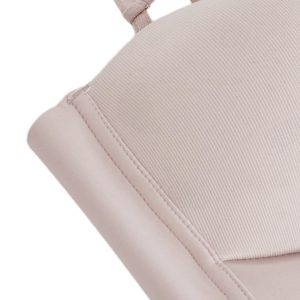
How to Turn a Bra Design Into a Production-Ready Tech Pack
Launching a bra collection often starts with something simple: a sketch, a reference sample, a mood board, or even an idea saved on a phone.
But a factory cannot manufacture an idea.
Before sampling begins, the design needs to be translated into clear technical information that pattern makers, sample technicians, material sourcing teams, and production staff can actually use.
That is where a bra tech pack becomes important.
For brands working with an OEM or bra manufacturer, a good tech pack does more than explain what the product should look like. It reduces misunderstandings, speeds up sampling, makes costing more accurate, and creates a clearer foundation for bulk production.
So what information should you prepare before sending your bra design to a factory?
What Is a Bra Tech Pack?
A tech pack is a technical document that communicates how a garment should be developed and manufactured.
For bras, this can be more complicated than it is for many basic apparel products.
A bra may include multiple components within a relatively small product:
- Cup fabric
- Cup lining
- Foam
- Underwire
- Elastic
- Straps
- Rings and sliders
- Hook-and-eye closure
- Lace or mesh
- Boning
- Binding
- Labels
- Decorative trims
Each component affects the appearance, fit, support, comfort, and manufacturing cost of the finished bra.
This is why simply sending a front-view sketch and saying “make something similar” often creates unnecessary rounds of sampling.
The clearer the information at the beginning, the easier it is for the manufacturer to understand your design intention.
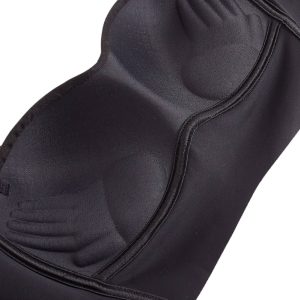
You Do Not Necessarily Need a Perfect Tech Pack Before Contacting a Factory
This is especially important for new lingerie brands.
You do not always need to hire a technical designer and complete every production specification before speaking with a manufacturer.
Different buyers approach us at different stages.
Some already have:
complete technical drawings + measurements + materials + BOM + grading requirements.
Others may only have:
a sketch + reference bra + preferred fabric + basic size requirements.
Both can be workable starting points.
An experienced private label lingerie manufacturer can review the information available and determine what still needs to be clarified before sampling.
The objective is not to make your first document perfect.
The objective is to remove ambiguity.
1. Start With Clear Front and Back Views
The first thing the factory needs to understand is the overall construction.
At minimum, provide:
Front view
and
Back view
If the bra contains unusual construction details, additional side or interior views can also be helpful.
Your drawing should indicate important features such as:
- Neckline shape
- Cup coverage
- Center front shape
- Wing height
- Strap position
- Closure type
- Seam placement
- Lace placement
- Decorative details
The drawing does not have to be artistic.
A technically clear sketch is usually more useful to a factory than a beautiful fashion illustration that does not show construction.
2. Define the Cup Construction
This is one of the most important decisions in bra development.
Two bras can look similar from the outside while using completely different cup constructions.
For example, your design might use:
Molded cups
Cut-and-sew cups
Spacer cups
Removable pads
Fixed foam padding
Unlined fabric cups
Push-up padding
The construction you choose affects machinery, molds, materials, pattern development, fit, support and production cost.
If you are still deciding between different cup structures, our guide to molded cup vs cut-and-sew bra construction explains the differences in more detail.
For OEM projects, do not assume that the factory can determine the exact construction from a fashion sketch alone.
Specify it whenever possible.
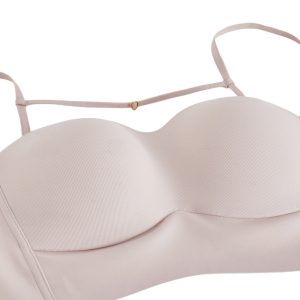
3. Identify Your Main Materials
You do not necessarily need to know the exact mill, fabric code or supplier when starting development.
But the factory should understand the type of material you want.
For example:
Main fabric: nylon/spandex microfiber
Cup: molded foam
Wing: power mesh
Trim: stretch lace
Strap: adjustable elastic
Closure: hook and eye
If you have a physical reference fabric, sending a swatch can be even more useful.
Photos can communicate appearance, but they cannot accurately communicate:
- Stretch
- Recovery
- Thickness
- Hand feel
- Compression
- Softness
- Transparency
These characteristics are especially important in lingerie.
For brands that do not have nominated material suppliers, the manufacturer may also suggest existing materials that achieve a similar appearance or performance.
4. Do Not Forget the Small Components
A common mistake in early bra development is focusing heavily on the fabric and cup while overlooking the smaller components.
But these components matter.
Consider specifying:
Straps
Should they be fixed or detachable?
How wide should they be?
Should they use standard sliders or decorative hardware?
Closure
How many hook-and-eye rows?
What width?
What color?
Underwire
Does the style require an underwire?
What cup sizes will use it?
Elastic
What width should be used at the underband, neckline or wing?
Hardware
Plastic or metal?
Standard finish or custom color?
These details may seem small individually, but together they significantly affect the final appearance and cost of a bra.
5. Give the Factory a Starting Size
A design cannot move efficiently into pattern development without a base size.
For example:
Sample size: 34B
or
Sample size: 36C
The factory normally develops the initial pattern around an agreed sample size before expanding the style into the full size range.
This first sample becomes an important reference point for evaluating:
- Cup fit
- Band tension
- Strap placement
- Coverage
- Center front
- Underarm height
- Overall silhouette
Trying to develop every size simultaneously before confirming the base fit usually makes the process unnecessarily complicated.
6. Provide Measurements When They Are Critical to Your Design
If your brand already has established fit standards, include the relevant measurements.
Depending on the design, these might include:
- Underband length
- Cup height
- Cup width
- Center front height
- Wing height
- Strap width
- Strap position
- Hook-and-eye width
However, new brands should not invent technical measurements simply because they believe every tech pack must contain them.
Incorrect measurements can sometimes create more problems than missing measurements.
If you have a reference bra with the fit you want, send it to the factory and explain which aspects should be maintained.
A physical reference sample can communicate a surprising amount of information.
7. Explain What Is Important — Not Just What Is Visible
This is one of the most useful things a buyer can add to a development brief.
Tell the manufacturer what must not change.
For example:
The neckline must remain low enough for everyday V-neck tops.
Or:
We want a natural rounded shape rather than an aggressive push-up effect.
Or:
The underband needs to feel soft enough for all-day wear.
Or:
The lace appearance is important, but the exact lace pattern can be replaced with a similar available option.
These comments help the development team understand your priorities.
Without them, the factory may spend time preserving a detail that is unimportant while changing something that is central to the design.
8. Separate “Must-Have” Details From Flexible Details
This can dramatically improve OEM development.
Imagine your original design specifies a particular 18 mm strap elastic.
The factory finds a visually similar 17 mm stock elastic with better availability and a lower MOQ.
Can it be used?
If the exact width is critical to your brand identity, the answer may be no.
If the overall appearance and support are what matter, the alternative might be perfectly acceptable.
A useful tech pack therefore distinguishes between:
Fixed specifications
and
Acceptable alternatives
This gives the factory room to solve sourcing and production problems without changing the core identity of the product.
9. Include Color References
“Beige,” “nude,” “pink,” and “red” are not precise color specifications.
There are hundreds of possible interpretations.
For early sampling, a general color description may be sufficient.
But when color accuracy becomes important, provide a more reliable reference such as:
- Pantone reference
- Physical color swatch
- Approved fabric cutting
- Existing product reference
Keep in mind that different materials may absorb dye differently.
The same requested color can appear slightly different across microfiber, lace, elastic and molded foam.
This is another reason why color approval should be treated as part of product development rather than assumed from a digital screen.
10. Add Branding Requirements Early
If the product will be sold under your own brand, tell the manufacturer what branding elements will eventually be required.
These may include:
- Main label
- Size label
- Care label
- Printed logo
- Custom hardware
- Branded elastic
- Hangtag
- Polybag
- Retail box
- Barcode sticker
Not all of these need to be produced during the first prototype.
However, identifying them early helps the factory understand the complete commercial product.
This is particularly important for private label bra manufacturing, where the final product involves more than simply sewing the garment.
What Happens After the Tech Pack Is Sent?
The tech pack is not the end of product development.
It is the beginning of a conversation.
Once the manufacturer receives the design information, the development team normally reviews:
Construction feasibility → material availability → pattern requirements → sample requirements → estimated cost
Questions often come back to the buyer.
This is normal.
In fact, thoughtful technical questions from the factory are usually a positive sign.
It means the team is examining how the design will actually be constructed rather than simply copying the drawing.
Your First Sample Is Where the Design Becomes Real
A design can look perfect on paper and still need adjustment once it becomes a physical bra.
The first prototype allows both the brand and manufacturer to evaluate things that cannot be fully judged from a drawing.
For example:
Does the cup create the intended shape?
Is the neckline too high?
Does the wing provide enough support?
Is the elastic too firm?
Are the straps positioned correctly?
Does the lace stretch differently than expected?
This is why sampling should be viewed as part of engineering the product rather than simply “checking whether the factory copied the design.”
For buyers preparing their first OEM project, understanding the bra manufacturing cost can also help explain why construction, materials, order quantity and customization all influence the final quotation.
A Tech Pack Should Evolve During Sampling
One mistake brands sometimes make is treating the original tech pack as a document that can never change.
In reality, the document should become more accurate as development progresses.
For example:
Version 1
Original design specifications
↓
First sample
Fit and construction reviewed
↓
Version 2
Measurements or materials revised
↓
Second sample
Corrections confirmed
↓
Final approved specifications
Ready for production
By the time bulk manufacturing begins, the technical information should reflect the approved sample, not simply the original idea.
This creates a much clearer reference for production and quality control.
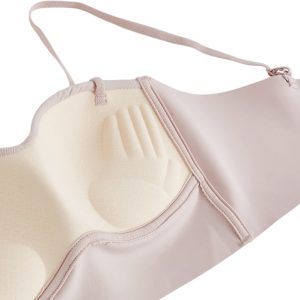
What If You Only Have a Sketch?
That is still enough to start a conversation.
Send the manufacturer:
- Your sketch
- Reference images
- Desired sample size
- Preferred materials
- Target quantity
- Target market
- Any critical fit or design requirements
From there, the factory can evaluate what additional information is needed.
For brands comparing potential suppliers, our guide to bra manufacturers in China also explains some of the factors worth considering when selecting a manufacturing partner.
From Design File to Manufacturing
The purpose of a tech pack is not paperwork.
It is communication.
A good technical package allows the designer and factory to look at the same product from two different perspectives.
The designer is thinking about:
appearance, customer, brand identity and fit.
The manufacturer is thinking about:
pattern, construction, materials, machinery, repeatability and production.
Successful OEM development happens when those two perspectives meet.
At BrasFactory, we work with brands at different stages of product development, from initial concepts and reference samples to more complete technical packages. Our factory in Puning, Guangdong, China supports bra and lingerie development, sampling and manufacturing for private label and OEM projects.
If you already have a bra design and would like to evaluate the next step, you can contact BrasFactory and send us your design information, reference images and expected order requirements.