
Push-Up Bra vs Everyday Bra: Which Should Your Brand Add to Its Collection?
When building a lingerie collection, brands often focus on colors, fabrics and visual identity first.
But there is a more fundamental product question:
What role should each bra play in the customer’s wardrobe?
A push-up bra and an everyday bra can look surprisingly similar in product photos, yet they may be designed around very different priorities.
One emphasizes lift, shaping and cleavage.
The other usually prioritizes comfort, versatility and long-hour wear.
For a lingerie brand, the push-up bra vs everyday bra decision is therefore not simply about choosing between two styles. It affects cup construction, padding, fabrics, fit, size strategy and even how the product should be marketed.
And in many collections, the best answer is not choosing one or the other.
It is understanding how the two categories can work together.
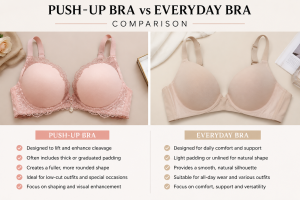
Push-Up Bra vs Everyday Bra: The Main Difference
Let’s begin with the simplest distinction.
A push-up bra is generally designed to deliberately change the appearance and position of the breast.
Depending on the construction, it may:
- lift the breast upward;
- move breast tissue inward;
- create more cleavage;
- increase the appearance of upper-cup fullness;
- create a more defined silhouette.
An everyday bra, by contrast, is usually developed around repeated daily use.
Its priorities may include:
- comfort;
- natural shaping;
- smoothness under clothing;
- reliable support;
- easy fit;
- versatility.
That does not mean an everyday bra cannot provide lift.
And it certainly does not mean a push-up bra cannot be comfortable.
The difference is primarily about which performance characteristics are given priority during product development.
A Quick Comparison for Product Buyers
| Product Decision | Push-Up Bra | Everyday Bra |
|---|---|---|
| Primary purpose | Lift and shaping | Daily comfort and support |
| Padding | Often moderate to heavy | None to moderate |
| Cleavage | Usually more emphasized | Usually more natural |
| Cup shape | Designed to enhance | Designed for versatility |
| Long-hour wear | Depends heavily on construction | Usually a major priority |
| Under clothing | Depends on design | Often designed to be smooth |
| Fashion impact | Strong | Moderate |
| Repeat purchase potential | Occasion + fashion driven | Strong daily-use potential |
| Wired options | Very common | Common |
| Wireless options | Increasingly common | Very common |
This table is useful as a starting point, but brands should not treat these categories as rigid rules.
Modern bra collections increasingly combine characteristics from both.
The Traditional Push-Up Bra Is Changing
The classic push-up bra was often associated with:
thick padding + underwire + dramatic cleavage.
That product still has a market.
But it is no longer the only way to develop a push-up bra.
Brands are increasingly exploring products that provide:
- lighter lift;
- softer foam;
- graduated padding;
- wireless construction;
- smooth molded cups;
- more natural cleavage.
This creates an interesting opportunity:
The Everyday Push-Up Bra
Instead of asking the customer to choose between comfort and enhancement, the product attempts to provide both.
The development objective becomes:
Noticeable shaping without making the wearer feel heavily padded.
We looked at this issue in more detail in our guide to everyday push-up bra padding, including how padding position can sometimes matter more than simply increasing foam thickness.
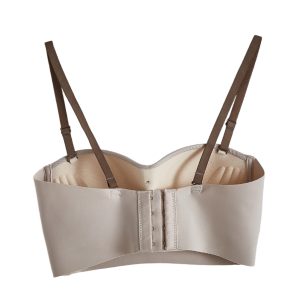
What Makes a Push-Up Bra Actually Push Up?
Padding is the most obvious answer.
But it is not the complete answer.
Push-up performance can come from the interaction between:
- cup shape;
- foam;
- padding position;
- underwire;
- center front;
- side support;
- wing tension;
- straps.
For example, padding concentrated toward the lower outer cup can encourage the breast to move upward and inward.
But if the cup volume is incorrect, simply increasing the padding can cause spillage rather than attractive cleavage.
This is why brands developing a custom push-up style should consider the complete cup structure.
The choice between a molded and seamed cup also matters. Our comparison of molded cup vs cut-and-sew bra construction explains how each approach can influence shape and product design.
What Makes a Good Everyday Bra?
Now consider the product from the opposite direction.
Imagine a customer putting on a bra at 7:30 in the morning.
She goes to work.
She sits for several hours.
She walks.
She drives.
She eats lunch.
She continues wearing the bra into the evening.
That is a very different use case from evaluating a bra for three minutes in front of a mirror.
For an everyday product, small discomforts become much more noticeable over time.
A good everyday bra therefore needs to consider:
Band Pressure
Support is important, but excessive tension can become uncomfortable during long wear.
Cup Edge
A rigid or poorly fitted cup edge may become visible under clothing or create pressure against the breast.
Straps
The straps should provide stability without excessive shoulder pressure.
Fabric
The material needs to balance softness, recovery, support and breathability.
Hardware
Rings, sliders and hook-and-eye closures should not create unnecessary irritation.
The objective is not simply to make the bra “soft.”
A very soft bra with poor recovery can also become uncomfortable if it provides insufficient support.
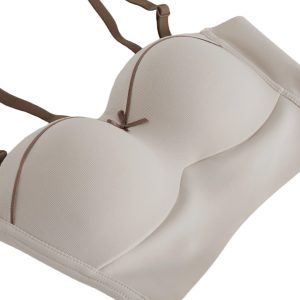
Should an Everyday Bra Be Wireless?
Not necessarily.
Both wired and wireless constructions can work well for everyday bras.
The correct choice depends on the intended customer and product positioning.
Wired Everyday Bra
Can provide:
- defined cup separation;
- stable shaping;
- familiar support;
- structured fit.
Wireless Everyday Bra
Can provide:
- softer wearing experience;
- greater flexibility;
- casual styling;
- fewer rigid components.
However, removing the wire does not eliminate the need for structure.
A wireless bra still needs to manage support through elements such as:
- cup construction;
- underband;
- side panels;
- fabric;
- elastic;
- straps.
For brands working with an OEM bra manufacturer, the product brief should therefore explain the desired support and wearing experience instead of simply stating “wireless.”
Which Product Is Easier to Sell?
This is where the decision becomes commercial rather than purely technical.
An everyday bra has one major advantage:
frequency of use.
If a customer finds an everyday bra that fits well, she may buy:
- several colors;
- replacements;
- additional units;
- another similar style.
That can make everyday bras valuable foundation products for a lingerie collection.
A push-up bra has a different advantage:
a very clear visual promise.
Customers understand why they might buy it.
The product can deliver an obvious transformation in:
- cleavage;
- shape;
- lift;
- silhouette.
That makes it useful as a stronger fashion or benefit-driven product.
For many brands, the two categories serve different commercial purposes.
A Small Collection May Need Both
Imagine a new lingerie brand launching with only three bras.
Instead of developing three products with nearly identical functions, the collection might contain:
Style 1 — Everyday Wireless Bra
The comfort-driven product.
Style 2 — Smooth Everyday T-Shirt Bra
The versatile foundation product.
Style 3 — Push-Up Bra
The enhancement product.
Now each style has a reason to exist.
The customer is not simply choosing between three colors or slightly different necklines.
She is choosing according to what she needs from the bra.
This can make the collection easier to understand and easier to market.
Don’t Let the Push-Up Bra Cannibalize the Everyday Bra
There is an interesting product-development risk here.
Suppose the everyday bra already provides moderate lift.
Then the brand develops a push-up bra that provides only slightly more lift.
The customer may struggle to understand why both products exist.
The opposite can also happen.
If the push-up bra becomes so comfortable and lightly padded that it behaves almost exactly like the everyday bra, the distinction between the two products becomes weak.
This does not mean the styles need to be dramatically different.
But each should have a clear product promise.
For example:
Everyday Bra
Smooth comfort and natural shaping for all-day wear.
Everyday Push-Up Bra
Comfortable daily wear with subtle lift.
Maximum Push-Up Bra
Strong lift and enhanced cleavage.
Now the customer understands the progression.
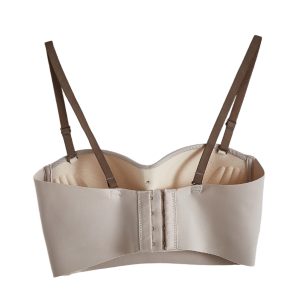
What About Fabric?
Fabric can help communicate the difference between the products.
An everyday bra might prioritize:
- soft microfiber;
- breathable materials;
- smooth finishes;
- flexible stretch;
- soft lining.
A fashion push-up bra might place more emphasis on:
- lace;
- decorative mesh;
- satin appearance;
- visual texture.
But this is not a strict rule.
A lace everyday bra can work beautifully.
So can a smooth push-up bra.
The important point is that material selection should support the intended wearing experience.
And once a sample has been fitted, changing material should be evaluated carefully because fabric stretch and recovery can affect the fit. We explain this in why a bra sample can fit differently after changing fabric.
Think About Color Strategy Too
The two categories may also justify different color strategies.
For everyday bras, core colors often make sense:
- Black
- White
- Beige
- Nude tones
- Neutral colors
These are easy to coordinate with clothing and may remain in the collection for longer periods.
Push-up bras can provide more room for:
- seasonal colors;
- fashion colors;
- lace combinations;
- special collections;
- Valentine’s or holiday ranges.
This gives brands an opportunity to combine stable core products with more visually expressive releases.
Size Strategy Should Not Be an Afterthought
A brand may also decide that every style does not need exactly the same size strategy.
A lightly padded everyday bra and a dramatic push-up bra can behave differently across cup sizes.
For example, a heavy padding proportion that creates the intended effect in a smaller cup may not be appropriate for every larger cup size.
Similarly, a wireless everyday design may require additional structural changes as cup volume increases.
That can affect:
- strap width;
- wing construction;
- lining;
- elastic;
- padding;
- cup structure.
Size development should therefore be considered during product design—not simply after the first sample has been approved.
Which Should a New Lingerie Brand Develop First?
If budget allows only one initial style, the answer depends on the brand.
Consider the customer promise.
Start With an Everyday Bra If:
Your brand is built around:
- comfort;
- daily wear;
- wardrobe essentials;
- minimalist lingerie;
- repeat purchases.
Start With a Push-Up Bra If:
Your brand emphasizes:
- cleavage;
- shaping;
- fashion;
- body contouring;
- visible transformation.
Consider an Everyday Push-Up Bra If:
Your positioning sits somewhere in between.
This can be an interesting product because it combines two strong consumer needs:
“I want to look better.”
and
“I don’t want to be uncomfortable all day.”
But combining those benefits successfully requires careful product development.
What Should You Tell the Factory?
Do not begin the development brief with:
“We need a good push-up bra.”
Instead, explain the customer experience.
For example:
“We are developing a smooth everyday push-up bra for women who normally wear T-shirt bras. We want noticeable but natural lift, moderate cleavage and comfortable long-hour wear. The cup should remain smooth under fitted clothing.”
That one paragraph tells the development team much more than simply specifying “push-up.”
If you already have a drawing or reference product, a clear bra tech pack can then translate the concept into construction, materials, measurements and branding requirements.
Build a Collection, Not Just Individual Products
One of the most useful questions a lingerie brand can ask is:
Why does this product need to exist in our collection?
A push-up bra should not simply be an everyday bra with more foam.
An everyday bra should not simply be a push-up bra with the padding removed.
Each product should have a clear combination of:
customer need + fit + function + visual identity + price position.
Once those decisions are clear, the technical development becomes much easier.
Developing Push-Up and Everyday Bras With BrasFactory
At BrasFactory, our factory in Puning, Guangdong, China works with overseas brands on OEM and private label bra development.
Customers can send:
- Original designs
- Tech Packs
- Reference bras
- Measurement charts
- Fabric requirements
- Size ranges
- Logo artwork
- Packaging requirements
If you are still evaluating the right production partner, you can also read our guide to bra manufacturers in China and learn more about our private label lingerie manufacturing options.
For original customer designs, confidential development information can be handled under an NDA when required.
If you already have a Push-Up or Everyday Bra concept, contact BrasFactory and send us your design or reference product for evaluation.
BrasFactory
Puning, Guangdong, China
Website: https://www.brasfactory.com/
Email: Climo@brasfactory.com
WhatsApp / WeChat: +86 131 4874 7185
FAQ
What is the main difference between a push-up bra and an everyday bra?
A push-up bra generally prioritizes lift, shaping and cleavage, while an everyday bra usually places greater emphasis on comfort, versatility and long-hour wear.
Can a push-up bra be comfortable enough for everyday wear?
Yes. An everyday push-up bra can use moderate or graduated padding and a construction designed to balance lift with comfort.
Does a push-up bra always need underwire?
No. Wireless push-up bras are possible, although they need to create support and shaping through cup structure, padding, side support, fabric and underband construction.
Should a new lingerie brand start with an everyday bra or a push-up bra?
It depends on the brand’s target customer and positioning. Comfort-focused brands may prioritize everyday bras, while shaping or fashion-focused brands may lead with push-up styles.
Can the same bra be both everyday and push-up?
Yes. An everyday push-up bra can combine subtle or moderate enhancement with a construction intended for longer wear.
Can BrasFactory manufacture custom Push-Up and Everyday Bras?
OEM and private label projects can be evaluated based on the customer’s design, construction, materials, size range, quantity and customization requirements.