When comparing a sports bra vs regular bra, many people assume the only difference is appearance. In reality, these two bra styles are engineered for completely different purposes.
A sports bra is designed to reduce breast movement during physical activity, while a regular bra focuses on shaping, comfort, and everyday styling.
Understanding these differences helps consumers choose the right bra for different situations and enables lingerie brands to develop product collections that better match customer needs.
⭐ At a Glance
If You Need…
Choose…
Running
Sports Bra
Office Wear
Regular Bra
Gym Training
Sports Bra
Everyday Fashion
Regular Bra
Yoga
Sports Bra
Dresses
Regular Bra
High Support
Sports Bra
Natural Shape
Regular Bra
Expert Insight
Sports bras are designed to control movement rather than enhance appearance. Regular bras focus on shaping and everyday comfort instead of impact protection.
Industry Insight
As active lifestyles become more common, consumers increasingly purchase multiple bra categories rather than relying on a single style.
Many lingerie brands now include sports bras, wireless bras, and everyday bras within the same collection to meet different wearing occasions.
What Is a Sports Bra?
A sports bra is specifically engineered to reduce breast movement during exercise.
Support comes from:
Compression
Encapsulation
Wide underbands
Performance fabrics
Reinforced straps
The primary objective is stability during movement.
What Is a Regular Bra?
A regular bra is designed for everyday wear.
Depending on the style, it may prioritize:
Comfort
Fashion
Shape enhancement
Cleavage
Seamless appearance
Regular bras include many categories such as:
Push-up bras
T-shirt bras
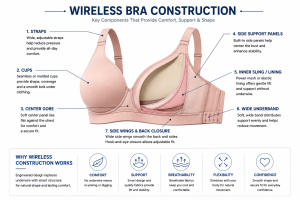
Wireless bras
Lace bras
Underwire bras
Comparison Table
Sports Bra vs Regular Bra
Feature
Sports Bra
Regular Bra
Motion Control
⭐⭐⭐⭐⭐
⭐⭐☆☆☆
Moisture Management
⭐⭐⭐⭐⭐
⭐⭐⭐☆☆
Lift
⭐⭐⭐⭐☆
⭐⭐⭐⭐⭐
Breathability
⭐⭐⭐⭐⭐
⭐⭐⭐⭐☆
Daily Fashion
⭐⭐⭐☆☆
⭐⭐⭐⭐⭐
Exercise
⭐⭐⭐⭐⭐
⭐⭐☆☆☆
Office Wear
⭐⭐⭐☆☆
⭐⭐⭐⭐⭐
Support During Running
⭐⭐⭐⭐⭐
⭐☆☆☆☆
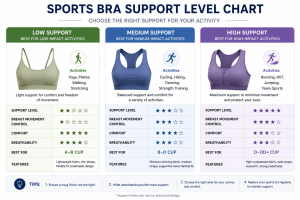
Sports Bra Support Level Chart
Buyer Tip
For most consumers, a sports bra and a regular bra serve different purposes. Building a wardrobe that includes both styles offers greater comfort and versatility than relying on a single type of bra.
Structural Differences
Although they may appear similar, sports bras and regular bras are built differently.
Sports Bra
Support comes from:
Compression panels
Encapsulation cups
High-recovery elastic
Wide shoulder straps
Reinforced underbands
Regular Bra
Support comes from:
Underwire (in some styles)
Molded cups
Adjustable straps
Fashion-oriented construction
Support Comparison
Activity
Sports Bra
Regular Bra
Walking
★★★★★
★★★★☆
Yoga
★★★★★
★★★☆☆
Gym
★★★★★
★★★☆☆
Running
★★★★★
★☆☆☆☆
Daily Office
★★★☆☆
★★★★★
Casual Wear
★★★★☆
★★★★★
Comfort Comparison
Comfort is one of the biggest differences when comparing a sports bra vs regular bra. Although both are designed to support the bust, they prioritize different wearing experiences.
Sports Bra
Sports bras are built for movement and stability.
Advantages include:
Reduced breast movement
Wide supportive straps
Elastic underbands
Breathable technical fabrics
Better weight distribution
These features make sports bras ideal for exercise and other physically active situations.
Regular Bra
Regular bras focus more on shaping and appearance.
Advantages include:
Natural silhouette
Fashion styling
Variety of cup designs
Suitable for office and casual wear
More outfit compatibility
Many consumers choose regular bras for everyday clothing and formal occasions.
Support Comparison
The support provided by each bra depends on its construction and intended use.
Feature
Sports Bra
Regular Bra
Motion Control
★★★★★
★★☆☆☆
Bust Stability
★★★★★
★★★★☆
Long Workout Comfort
★★★★★
★★☆☆☆
Shape Enhancement
★★★☆☆
★★★★★
Everyday Appearance
★★★★☆
★★★★★
Sports bras excel during physical activity, while regular bras are generally better suited for shaping under daily clothing.
Which Bra Is Best for Different Activities?
Different situations require different support.
Activity
Recommended Bra
Why
Yoga
Sports Bra
Flexible support and comfort
Walking
Sports Bra
Better movement control
Running
Sports Bra
High-impact support
Weight Training
Sports Bra
Stability during exercise
Office Work
Regular Bra
Natural appearance under clothing
Evening Events
Regular Bra
Better shaping and styling
Traveling
Wireless Sports Bra
Comfort for long periods
Sports Bra Support Level Chart
Which Bra Fits Different Body Types?
Body shape and bust size also influence bra selection.
Body Type
Recommended Style
Reason
Smaller Bust
Compression Sports Bra
Comfortable and lightweight
Medium Bust
Hybrid Sports Bra
Balanced support
Fuller Bust
Encapsulation Sports Bra
Better individual support
Everyday Wear
Regular Bra
Natural shaping
Sensitive Shoulders
Wide-Strap Sports Bra
Better weight distribution
The right fit is often more important than the bra category itself.
Product Development Tips for Brands
For lingerie and activewear brands, a complete product assortment should include both sports bras and regular bras rather than focusing on only one category.
A typical product structure might include:
Collection
Recommended Products
Everyday Collection
T-Shirt Bras, Wireless Bras
Active Collection
Low, Medium & High Support Sports Bras
Fashion Collection
Push-Up Bras, Lace Bras
Performance Collection
High-Impact Sports Bras
Lounge Collection
Soft Wireless Bras
This strategy helps brands meet a wider range of customer needs while encouraging repeat purchases.
Common Buying Mistakes
Many consumers choose the wrong bra because they misunderstand how sports bras and regular bras are designed.
Wearing a Regular Bra for High-Impact Exercise
Regular bras are not designed to minimize breast movement during activities such as running or HIIT, which can lead to discomfort.
Choosing Maximum Support for Every Workout
High-support sports bras are ideal for intense exercise but may feel unnecessarily restrictive for yoga or walking. Matching the support level to the activity generally provides a better wearing experience.
Ignoring Fabric Performance
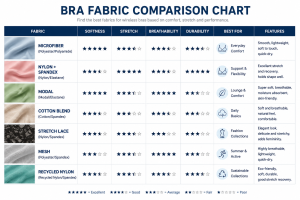
Moisture-wicking and quick-drying fabrics play a significant role in comfort during exercise. Selecting a sports bra based only on appearance may overlook these functional benefits.
Using One Bra for Every Occasion
Many consumers benefit from owning both sports bras and regular bras. Each style is designed for different situations and performs best within its intended use.
Decision Guide
Should You Choose a Sports Bra or a Regular Bra?
What are you doing?

        │
 Daily Activities
        │
   Regular Bra
        │
────────┼────────
        │
 Yoga / Walking
        │
 Low Support Sports Bra
        │
────────┼────────
        │
 Gym Training
        │
 Medium Support Sports Bra
        │
────────┼────────
        │
 Running / HIIT
        │
 High Support Sports Bra
Market Trends
The sports bra category continues to evolve alongside broader activewear trends.
Current developments include:
Seamless sports bras
Bonded construction
Recycled performance fabrics
Adjustable support systems
Convertible straps
Inclusive size ranges
Athleisure-inspired designs
Many consumers now wear sports bras beyond workouts, making versatility an increasingly important consideration for product development.
Expert Insight
The best sports bra is not always the one with the highest level of support. The ideal choice depends on matching the support level, fabric performance, and construction to the intended activity. Brands that offer clear guidance on support levels often improve customer satisfaction and reduce product returns.
Bra Fabric Comparison Chart
Can a Sports Bra Replace a Regular Bra?
Many consumers ask whether a sports bra can completely replace a regular bra. The answer depends on how and where it will be worn.
For exercise, a sports bra is generally the better choice because it is specifically designed to control movement and improve stability.
For office wear, formal occasions, or fashion styling, many people still prefer a regular bra because it provides a more natural silhouette and pairs better with a wider variety of clothing.
Rather than replacing one another, sports bras and regular bras serve different purposes and work best as complementary products.
How Brands Position Sports Bras and Regular Bras
Successful lingerie and activewear brands usually develop separate product lines instead of treating sports bras as a substitute for regular bras.
Everyday Collection
Recommended products:
Wireless Bras
T-Shirt Bras
Seamless Bras
Primary focus
Comfort
Daily wear
Invisible under clothing
Active Collection
Recommended products:
Low Support Sports Bras
Medium Support Sports Bras
High Support Sports Bras
Primary focus
Motion control
Moisture management
Stability during exercise
Fashion Collection
Recommended products:
Push-Up Bras
Lace Bras
Underwire Bras
Primary focus
Shape enhancement
Styling
Special occasions
Premium Collection
Premium collections often combine technical fabrics with refined aesthetics.
Examples include:
Bonded sports bras
Seamless active bras
Premium microfiber bras
Sustainable activewear collections
This approach helps brands address different customer expectations while maintaining a consistent product portfolio.
Which Bra Is Better for Different Age Groups?
Although personal preference is always important, purchasing habits often vary by lifestyle and age.
Age Group
Recommended Style
Main Reason
18–25
Sports Bra & Wireless Bra
Active lifestyle and comfort
26–40
Sports Bra & Regular Bra
Different daily activities
40–55
Wireless Bra & Medium Support Sports Bra
Long-term comfort and support
55+
Wireless Bra
Soft support and ease of wear
These are general buying patterns rather than strict recommendations. Proper fit remains the most important factor.
Care Tips
Proper care helps maintain the elasticity and support of both sports bras and regular bras.
Recommended practices include:
Wash after intense workouts to remove sweat and oils.
Use a mild detergent.
Avoid fabric softeners, which can reduce moisture-wicking performance.
Air dry whenever possible.
Store molded cups carefully to prevent deformation.
Replacing sports bras once the elastic underband loses recovery helps maintain effective support during exercise.
Frequently Asked Questions
Can I wear a sports bra every day?
Yes. Many low- and medium-support sports bras are comfortable enough for daily wear, especially for casual activities or working from home.
Is a regular bra suitable for exercise?
Regular bras may be suitable for light daily movement, but they are generally not designed to reduce breast movement during moderate or high-impact exercise.
Which bra is better for running?
A high-support sports bra is usually the best choice for running because it minimizes movement and improves stability.
Which bra is more comfortable?
Comfort depends on the activity. Sports bras are often more comfortable during exercise, while regular bras may feel more suitable for office wear or formal clothing.
Should lingerie brands offer both sports bras and regular bras?
Yes. Offering multiple bra categories allows brands to meet a wider range of customer needs and creates more opportunities for repeat purchases.
Conclusion
When comparing sports bra vs regular bra, neither style is universally better. Each is designed to solve different problems.
Sports bras focus on stability, motion control, and performance during physical activity. Regular bras prioritize shaping, styling, and everyday versatility.
For consumers, owning both types provides greater flexibility for different occasions. For brands, developing complementary sports and everyday bra collections helps create a stronger product portfolio and better serves today’s diverse customer needs.