
Best Fabrics for Sports Bras: Comfort, Support & Performance
Executive Summary
Choosing the best fabrics for sports bras is just as important as selecting the right support level. High-quality performance fabrics help control moisture, improve stretch recovery, maintain support, and enhance comfort during exercise.
Modern sports bras combine advanced synthetic fibers with technical knitting and moisture-management technologies to meet the demands of different activities—from yoga and walking to running and high-impact training.
This guide compares the most commonly used sports bra fabrics and explains how each material performs in real-world applications.
⭐ At a Glance
| If You Need… | Recommended Fabric |
|---|---|
| Maximum Stretch | Nylon + Spandex |
| Moisture Control | Polyester |
| Premium Comfort | Microfiber |
| Lightweight Breathability | Mesh |
| Sustainability | Recycled Nylon |
| Everyday Training | Nylon Blend |
| High-Impact Sports | Compression Fabric |
Expert Insight: Fabric recovery is just as important as stretch. A sports bra that stretches easily but fails to recover quickly will gradually lose its support after repeated workouts and washing.
Industry Insight
As activewear continues to grow worldwide, consumers increasingly expect sports bras to provide not only support but also moisture management, breathability, and long-term durability.
Many premium brands now combine recycled fibers, seamless knitting, bonded construction, and high-recovery elastane to improve both comfort and athletic performance.
Why Fabric Matters in Sports Bras
Unlike everyday bras, sports bras are exposed to repeated stretching, perspiration, and intensive movement.
Performance fabrics directly influence:
- Motion control
- Stretch recovery
- Sweat management
- Breathability
- Drying speed
- Durability
- Shape retention
Selecting the right fabric helps maintain consistent support throughout the product’s lifespan.
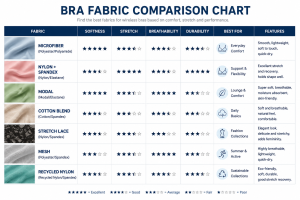
Comparison Table
Best Fabrics for Sports Bras
| Fabric | Stretch | Moisture Control | Breathability | Best For |
|---|---|---|---|---|
| Nylon + Spandex | ★★★★★ | ★★★★☆ | ★★★★☆ | Running & Training |
| Polyester | ★★★★☆ | ★★★★★ | ★★★★☆ | Cardio & Gym |
| Microfiber | ★★★★☆ | ★★★★☆ | ★★★★★ | Everyday Activewear |
| Mesh | ★★★☆☆ | ★★★★☆ | ★★★★★ | Ventilation Panels |
| Recycled Nylon | ★★★★★ | ★★★★☆ | ★★★★☆ | Sustainable Collections |
| Compression Knit | ★★★★★ | ★★★★☆ | ★★★☆☆ | High-Impact Sports |
Nylon and Spandex: The Industry Standard
The combination of nylon and spandex remains one of the most widely used fabric blends in sports bras.
Advantages
- Excellent elasticity
- Strong recovery
- Lightweight feel
- Long-lasting durability
- Smooth appearance
Best Applications
- Running
- Fitness training
- Medium-support sports bras
- High-support sports bras
Polyester: Superior Moisture Management
Polyester is valued for its moisture-wicking properties and quick drying performance.
Advantages
- Fast drying
- Moisture transport
- Color durability
- Easy care
Best Applications
- Cardio training
- Outdoor activities
- Team sports
- Performance activewear
Microfiber: Premium Everyday Comfort
Microfiber provides a soft hand feel while maintaining good durability.
It is often used in:
- Studio collections
- Yoga bras
- Low-impact sports bras
- Athleisure products
Its smooth surface also makes it comfortable for extended daily wear.
Polyester: Fast-Drying Performance
Polyester is one of the most widely used performance fibers in sports bras because of its excellent moisture management and durability.
Unlike natural fibers, polyester absorbs very little moisture, allowing sweat to move quickly to the fabric surface where it can evaporate.
Advantages
- Quick-drying performance
- Excellent color retention
- Lightweight construction
- Durable after repeated washing
- Resistant to shrinking
Best Applications
- Running bras
- HIIT collections
- Outdoor training
- Performance activewear
Mesh: Maximum Breathability
Mesh fabrics are commonly used as ventilation panels rather than the primary fabric.
Strategically placed mesh improves airflow during exercise and helps regulate body temperature.
Advantages
- Excellent ventilation
- Lightweight feel
- Improved cooling
- Reduced heat buildup
Best Applications
- Back panels
- Side wings
- High-sweat zones
- Summer collections
Recycled Nylon
Sustainability has become a major trend in the activewear industry.
Many brands now use recycled nylon made from reclaimed materials without significantly compromising performance.
Advantages
- Reduced environmental impact
- Excellent elasticity
- Soft touch
- Premium appearance
Best Applications
- Sustainable collections
- Premium activewear
- Eco-conscious brands
Compression Fabrics
Compression fabrics combine high-elastic fibers with specialized knitting structures to improve stability during movement.
Rather than simply stretching, these fabrics are designed to return quickly to their original shape after repeated motion.
Advantages
- Strong recovery
- Better motion control
- Long-lasting support
- Improved durability
Best Applications
- High-impact sports bras
- Running collections
- Professional training apparel
Which Fabric Is Best for Different Activities?
Different activities place different demands on sports bra fabrics.
| Activity | Recommended Fabric | Main Benefit |
|---|---|---|
| Yoga | Microfiber | Softness and flexibility |
| Walking | Nylon Blend | Comfort and stretch |
| Gym Training | Nylon + Spandex | Balanced support |
| Cycling | Polyester Blend | Moisture management |
| Running | Compression Fabric | Motion control |
| HIIT | Compression Knit | Maximum stability |
| Outdoor Sports | Polyester + Mesh | Cooling and fast drying |
Fabric Selection Tips for Brands
When developing a sports bra collection, avoid using the same fabric across every product.
Instead, match the material to the intended activity.
| Collection | Recommended Fabrics |
|---|---|
| Yoga Collection | Microfiber, Modal |
| Training Collection | Nylon + Spandex |
| Running Collection | Compression Knit |
| Outdoor Collection | Polyester + Mesh |
| Sustainable Collection | Recycled Nylon |
Using activity-specific fabrics creates clearer product positioning and improves customer satisfaction.
Common Fabric Selection Mistakes
Selecting fabrics based only on cost can reduce long-term product performance.
Choosing Cotton for High-Impact Sports
Cotton absorbs moisture and dries more slowly than technical performance fabrics, making it less suitable for high-intensity exercise.
Ignoring Stretch Recovery
Fabrics with poor recovery lose their supportive properties over time, especially after frequent washing and repeated workouts.
Overlooking Breathability
High support should not come at the expense of ventilation. Breathable fabrics and strategically placed mesh panels can improve comfort without sacrificing stability.
Using Heavy Fabrics Unnecessarily
Heavier materials do not automatically provide better support. Well-engineered lightweight fabrics often deliver better movement, comfort, and long-term performance.
Expert Insight
The most effective sports bra fabrics balance four key characteristics: elasticity, recovery, moisture management, and breathability.
Brands that select fabrics according to activity level rather than relying on a single material across the entire collection generally achieve better performance, lower return rates, and stronger customer satisfaction.
Market Trends
Innovation in sports bra fabrics continues to accelerate.
Current trends include:
- Recycled performance fibers
- Seamless knitting technology
- Bonded construction
- Four-way stretch fabrics
- Anti-odor finishes
- Cooling yarn technology
- Lightweight compression textiles
As consumers become more knowledgeable about activewear, fabric performance has become an increasingly important purchasing factor.
How to Choose the Right Fabric
The ideal sports bra fabric depends on the intended activity rather than a single “best” material.
For Yoga & Pilates
Recommended fabrics:
- Microfiber
- Nylon Blend
- Modal Blend
Priority:
- Softness
- Flexibility
- Breathability
For Gym Training
Recommended fabrics:
- Nylon + Spandex
- Polyester Blend
Priority:
- Stretch recovery
- Moisture management
- Durability
For Running & HIIT
Recommended fabrics:
- Compression Knit
- Nylon + Spandex
- Polyester + Mesh
Priority:
- Motion control
- Shape retention
- Fast drying
For Outdoor Activities
Recommended fabrics:
- Polyester
- Mesh
- Recycled Nylon
Priority:
- UV resistance
- Cooling
- Moisture transport
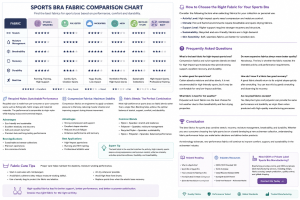
Fabric Performance Comparison
| Fabric | Stretch | Recovery | Sweat Control | Durability | Overall |
|---|---|---|---|---|---|
| Nylon + Spandex | ⭐⭐⭐⭐⭐ | ⭐⭐⭐⭐⭐ | ⭐⭐⭐⭐☆ | ⭐⭐⭐⭐⭐ | ⭐⭐⭐⭐⭐ |
| Polyester | ⭐⭐⭐⭐☆ | ⭐⭐⭐⭐☆ | ⭐⭐⭐⭐⭐ | ⭐⭐⭐⭐⭐ | ⭐⭐⭐⭐☆ |
| Microfiber | ⭐⭐⭐⭐☆ | ⭐⭐⭐⭐☆ | ⭐⭐⭐⭐☆ | ⭐⭐⭐⭐☆ | ⭐⭐⭐⭐☆ |
| Mesh | ⭐⭐⭐☆☆ | ⭐⭐⭐☆☆ | ⭐⭐⭐⭐⭐ | ⭐⭐⭐⭐☆ | ⭐⭐⭐⭐☆ |
| Recycled Nylon | ⭐⭐⭐⭐⭐ | ⭐⭐⭐⭐⭐ | ⭐⭐⭐⭐☆ | ⭐⭐⭐⭐☆ | ⭐⭐⭐⭐⭐ |
| Compression Knit | ⭐⭐⭐⭐⭐ | ⭐⭐⭐⭐⭐ | ⭐⭐⭐⭐☆ | ⭐⭐⭐⭐⭐ | ⭐⭐⭐⭐⭐ |
Buying Checklist
Before selecting fabrics for a sports bra collection, brands should evaluate:
✅ Stretch recovery
✅ Moisture-wicking performance
✅ Breathability
✅ Fabric weight
✅ Abrasion resistance
✅ Color fastness
✅ Pilling resistance
✅ Sustainability certifications (if required)
Testing fabrics before bulk production helps ensure consistent product quality and long-term customer satisfaction.
Frequently Asked Questions
What is the best fabric for sports bras?
There is no single best fabric. Nylon-spandex blends remain the industry standard because they combine excellent stretch, recovery, and durability. Polyester performs particularly well for moisture management, while mesh improves ventilation.
Is cotton suitable for sports bras?
Cotton offers a soft feel but absorbs moisture and dries more slowly than technical performance fabrics. It is generally better suited for low-impact activities rather than high-intensity sports.
Why is stretch recovery important?
Stretch recovery determines how well a fabric returns to its original shape after repeated movement. Good recovery helps maintain support, fit, and comfort over time.
Are recycled fabrics as durable as virgin fibers?
High-quality recycled nylon and recycled polyester can provide performance comparable to virgin materials when manufactured using appropriate processes.
What fabric should brands choose for premium sports bras?
Many premium collections combine nylon, spandex, mesh, and recycled fibers to balance comfort, durability, moisture management, and sustainability.
Conclusion
Selecting the best fabrics for sports bras requires balancing comfort, support, breathability, moisture management, and long-term durability.
Rather than relying on a single material, leading activewear brands often combine technical fabrics to meet the specific demands of different activities and consumer preferences. By choosing fabrics based on performance requirements, brands can create sports bras that offer better comfort, improved support, and lasting value.
Related Reading
Sports Bra Series
- What Is a Sports Bra?
- Sports Bra vs Regular Bra
- How Sports Bras Are Made (Coming Soon)
- Sports Bra Manufacturer (Coming Soon)
Related Bra Guides
- What Is a Wireless Bra?
- Wireless Bra vs Underwire Bra
- Best Fabrics for Wireless Bras
Industry Resources
- OEKO-TEX® Standard 100
- Textile Exchange
- Global Recycled Standard (GRS)
- Grand View Research – Activewear Market
Need OEM or Private Label Sports Bra Manufacturing?
BrasFactory provides OEM and private label sports bra manufacturing services, including:
- Product Development
- Technical Fabric Sourcing
- Pattern Engineering
- Sample Production
- Quality Control
- Global Export Support
👉 Contact Us
https://www.brasfactory.com/contact/
Sports Bra Guides
- What Is a Sports Bra?
https://www.brasfactory.com/what-is-a-sports-bra/ - Sports Bra vs Regular Bra
https://www.brasfactory.com/sports-bra-vs-regular-bra/ - How Sports Bras Are Made
https://www.brasfactory.com/how-sports-bras-are-made/ - Sports Bra Manufacturer
https://www.brasfactory.com/sports-bra-manufacturer/
BrasFactory Standard External Resources:
Textile Standards
OEKO-TEX® STANDARD 100
https://www.oeko-tex.com/en/our-standards/oeko-tex-standard-100
International certification for testing textiles for harmful substances.
Textile Exchange
Global nonprofit promoting sustainable textile production and responsible sourcing.
Global Recycled Standard (GRS)
https://textileexchange.org/standards/global-recycled-standard/
Certification standard for recycled materials and responsible manufacturing.
bluesign®
Sustainability and chemical management system for the textile industry.
Industry Standards
ASTM International
International technical standards for textile and apparel testing.
ISO
Global standards for quality management and manufacturing systems.
Market Research
Grand View Research
https://www.grandviewresearch.com/
Global market reports covering lingerie, apparel, and activewear industries.