How Sports Bras Are Made: From Design to Production
Executive Summary
Understanding how sports bras are made helps brands and buyers appreciate the engineering behind high-performance activewear.
Unlike everyday bras, sports bras must withstand repetitive movement, frequent washing, and high levels of stretch while maintaining comfort and support. Achieving this requires specialized fabrics, precision pattern development, reinforced construction, and rigorous quality control.
This guide explains each stage of the manufacturing process, from product development to final inspection, and highlights the key factors that influence durability, fit, and athletic performance.
⭐ At a Glance
| Production Stage | Purpose |
|---|---|
| Product Design | Define performance goals |
| Pattern Development | Achieve accurate fit |
| Fabric Selection | Improve comfort & recovery |
| Cutting | Ensure production precision |
| Sewing | Assemble components |
| Reinforcement | Increase durability |
| Quality Inspection | Verify consistency |
| Packaging | Prepare for shipment |
Expert Insight: High-quality sports bras are engineered around movement. Fabric recovery, seam construction, and pattern accuracy often have a greater impact on performance than fabric thickness alone.
Industry Insight
Demand for high-performance sports bras continues to grow alongside the global activewear market.
Modern manufacturing increasingly incorporates seamless knitting, bonded construction, laser cutting, recycled fibers, and advanced moisture-management fabrics to improve comfort while reducing production waste.
Step 1: Product Design
Every sports bra begins with a clear understanding of the intended activity.
During product planning, manufacturers define:
- Activity level
- Target customer
- Support category
- Fabric requirements
- Cup construction
- Strap configuration
- Size range
- Performance expectations
A detailed product specification improves communication between designers, pattern makers, and production teams.
Step 2: Pattern Development
Pattern engineering determines how well the sports bra supports movement.
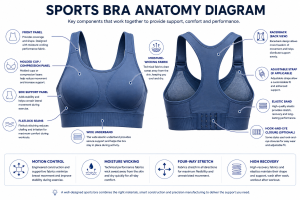
Technical designers develop:
- Front panels
- Back panels
- Cups
- Side wings
- Underband
- Shoulder straps
Grading across multiple sizes ensures consistent support throughout the product line.
Step 3: Performance Fabric Selection
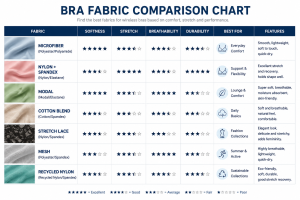
Selecting technical fabrics is critical because sports bras experience repeated stretching, perspiration, and frequent washing.
Common materials include:
- Nylon + Spandex
- Polyester
- Mesh
- Compression Knit
- Recycled Nylon
- Elastic Bands
Manufacturing Workflow
Product Design
      │
Pattern Development
      │
Fabric Selection
      │
Fabric Cutting
      │
Sewing
      │
Reinforcement
      │
Quality Inspection
      │
Packaging
      │
Shipment
Step 4: Fabric Cutting
After materials are approved, fabrics are cut according to digital production patterns.
Computer-controlled cutting systems improve:
- Cutting precision
- Material utilization
- Production efficiency
- Consistency between batches
Accurate cutting reduces sewing errors and helps maintain sizing consistency.
Step 5: Sewing and Assembly
Unlike regular bras, sports bras often require additional reinforcement in high-stress areas.
Assembly may include:
- Cup attachment
- Side panel construction
- Elastic underband installation
- Shoulder strap reinforcement
- Flatlock stitching
- Racerback assembly
- Hook-and-eye attachment (if applicable)
Flatlock seams are commonly used to reduce friction during exercise.
Step 6: Reinforcement and Structural Support
Unlike everyday bras, sports bras must withstand repeated stretching, intensive movement, and frequent washing. Reinforcement is therefore an essential stage of production.
Manufacturers typically strengthen areas that experience the greatest stress, including:
- Underband
- Shoulder straps
- Side panels
- Racerback connection
- Hook-and-eye closure
- Cup seams
These reinforcements help improve durability while maintaining consistent support throughout the product’s lifespan.
Step 7: Quality Inspection
Quality control begins long before the finished sports bra reaches the packing table.
Professional manufacturers inspect products throughout production.
Quality Control Checklist
| Inspection Stage | Main Focus |
|---|---|
| Fabric Inspection | Weight, stretch, color consistency |
| Cutting | Panel accuracy |
| Sewing | Stitch quality |
| Elastic Recovery | Underband & straps |
| Measurement | Size tolerance |
| Finished Product | Appearance & function |
| Packaging | Labels & accessories |
Continuous inspection helps reduce defects and maintain production consistency.
Step 8: Performance Testing
Unlike fashion bras, sports bras are also evaluated for functional performance.
Typical testing includes:
- Stretch recovery
- Moisture management
- Color fastness
- Seam strength
- Strap durability
- Wash resistance
- Shape retention
High-quality performance testing helps ensure the bra maintains its support after repeated workouts and washing.
Common Manufacturing Mistakes
Several production issues can reduce sports bra performance.
Poor Fabric Recovery
A fabric that loses elasticity quickly will reduce support after repeated use.
Weak Underband Construction
The underband provides much of the bra’s support. Insufficient reinforcement can affect stability during exercise.
Inadequate Seam Construction
Poor seam quality may increase irritation and shorten product life.
Flatlock stitching is often preferred because it minimizes friction during movement.
Limited Fit Testing
Testing only one sample size may lead to inconsistent grading across the size range.
Professional manufacturers typically evaluate multiple sample sizes before approving production.
Product Development Tips
When developing a sports bra collection, many brands create multiple support levels instead of relying on a single product.
| Collection | Recommended Features |
|---|---|
| Yoga Collection | Soft microfiber, light compression |
| Training Collection | Nylon-spandex blend, medium support |
| Running Collection | Compression knit, reinforced straps |
| High-Performance Collection | Hybrid construction, maximum recovery |
| Sustainable Collection | Recycled nylon, bonded finishes |
This product structure allows brands to serve different customer segments while maintaining a consistent design language.
Buyer’s Checklist
Before approving production, verify the following:
✔ Performance fabrics approved
✔ Pattern grading completed
✔ Sample fitting confirmed
✔ Elastic recovery tested
✔ Flatlock seams inspected
✔ Moisture management verified
✔ Packaging approved
✔ Quality standards documented
Expert Insight
The performance of a sports bra is determined by the interaction between materials, construction, and pattern engineering—not by any single component. High-recovery fabrics, reinforced structures, and accurate grading work together to provide lasting support, comfort, and durability.
Production Timeline
Developing a high-quality sports bra requires careful planning, testing, and production management. The timeline below reflects a typical OEM development process.
| Production Stage | Estimated Time |
|---|---|
| Product Planning | 2–5 Days |
| Pattern Development | 5–10 Days |
| Fabric Sourcing | 5–10 Days |
| Sample Production | 7–15 Days |
| Sample Revision | 5–10 Days |
| Bulk Production | 30–45 Days |
| Quality Inspection | 1–3 Days |
| Shipment | Depends on destination |
Production schedules may vary depending on order quantity, customization requirements, and material availability.
Sports Bra Manufacturing Workflow
Product Concept
        │
        ▼
Pattern Development
        │
        ▼
Performance Fabric Selection
        │
        ▼
Sample Production
        │
        ▼
Fit Testing
        │
        ▼
Bulk Production
        │
        ▼
Quality Inspection
        │
        ▼
Packaging
        │
        ▼
Global Shipment
Frequently Asked Questions
How are sports bras different from regular bras during manufacturing?
Sports bras require additional reinforcement, technical fabrics, stronger elastic recovery, and more rigorous performance testing because they are designed to withstand repetitive movement and frequent washing.
Which fabrics are most commonly used?
Manufacturers commonly use:
- Nylon + Spandex
- Polyester
- Compression Knit
- Mesh
- Recycled Nylon
- High-recovery elastic
These materials provide the stretch, support, and moisture management needed for athletic performance.
👉 Internal Link
Best Fabrics for Sports Bras
Why is flatlock stitching important?
Flatlock seams create a flatter finish that helps reduce skin irritation and chafing during exercise, making them a common choice for performance activewear.
How long does sports bra production take?
A complete development cycle—from product concept to finished production—typically takes 7–10 weeks, depending on sampling, material sourcing, and production volume.
What should brands test before mass production?
Recommended testing includes:
- Fabric recovery
- Moisture management
- Seam strength
- Color fastness
- Fit consistency
- Wash durability
- Size grading
Testing before bulk production helps reduce returns and improve customer satisfaction.
Conclusion
Understanding how sports bras are made reveals why high-performance activewear requires far more than attractive design.
From technical fabric selection and precision pattern development to reinforced construction and strict quality control, every production stage influences comfort, support, durability, and long-term performance.
For brands, investing in reliable manufacturing processes and experienced production partners helps create sports bras that meet the expectations of today’s active consumers.
Continue Reading
Sports Bra Knowledge Hub
- What Is a Sports Bra?
https://www.brasfactory.com/what-is-a-sports-bra/ - Sports Bra vs Regular Bra
https://www.brasfactory.com/sports-bra-vs-regular-bra/ - Best Fabrics for Sports Bras
https://www.brasfactory.com/best-fabrics-for-sports-bras/ - Sports Bra Manufacturer (Next Article)
Related Bra Guides
- What Is a Wireless Bra
https://www.brasfactory.com/what-is-a-wireless-bra/ - Wireless Bra vs Underwire Bra
https://www.brasfactory.com/wireless-bra-vs-underwire-bra/ - Best Fabrics for Wireless Bras
https://www.brasfactory.com/best-fabrics-for-wireless-bras/ - How Wireless Bras Are Made
https://www.brasfactory.com/how-wireless-bras-are-made/ - What Is a Push-Up Bra
https://www.brasfactory.com/what-is-a-push-up-bra/ - Push-Up Bra vs T-Shirt Bra
https://www.brasfactory.com/push-up-bra-vs-t-shirt-bra/
Industry Resources
- ASTM International
https://www.astm.org/ - OEKO-TEX® STANDARD 100
https://www.oeko-tex.com/en/our-standards/oeko-tex-standard-100 - Textile Exchange
https://textileexchange.org/ - Global Recycled Standard (GRS)
https://textileexchange.org/standards/global-recycled-standard/ - Grand View Research – Activewear Industry
https://www.grandviewresearch.com/
Develop Your Sports Bra Collection With BrasFactory
Whether you’re building a yoga collection, a high-impact running line, or a private label activewear brand, BrasFactory provides comprehensive OEM and private label manufacturing services.
Our Services
- Product Design & Development
- Pattern Engineering
- Technical Fabric Sourcing
- Sample Production
- OEM Manufacturing
- Private Label Solutions
- Quality Inspection
- Worldwide Shipping
👉 Contact Us
https://www.brasfactory.com/contact/