What Is a Sports Bra? Types, Benefits & How to Choose One
Executive Summary
If you’ve ever wondered what is a sports bra, the answer goes far beyond athletic clothing.
A sports bra is specifically designed to reduce breast movement during physical activity while improving comfort, stability, and performance. Unlike everyday bras, sports bras use specialized fabrics, supportive construction, and compression or encapsulation techniques to minimize movement during exercise.
Whether you’re walking, practicing yoga, lifting weights, or running a marathon, choosing the right sports bra can improve comfort and help reduce strain during physical activity.
⭐ At a Glance
| Activity | Recommended Support |
|---|---|
| Yoga | Low Support |
| Walking | Low Support |
| Pilates | Low Support |
| Gym Training | Medium Support |
| Cycling | Medium Support |
| Tennis | High Support |
| Running | High Support |
| HIIT | High Support |
Expert Insight: A sports bra should match the intensity of your activity. Choosing excessive support for low-impact exercise may reduce comfort, while insufficient support during high-impact sports can increase breast movement.
Industry Insight
The global activewear market continues to expand as more consumers adopt fitness-focused lifestyles.
Sports bras are no longer limited to athletic use. Many women now wear light-support sports bras for travel, working from home, and everyday comfort, making this category one of the fastest-growing segments in the lingerie industry.
What Is a Sports Bra?
A sports bra is designed to provide additional support during physical activity by reducing breast movement and improving overall stability.
Unlike traditional bras, sports bras focus on:
- Motion control
- Weight distribution
- Moisture management
- Stretch recovery
- Breathability
Different sports bras are engineered for different activity levels, which is why selecting the correct support level is essential.
How Does a Sports Bra Work?
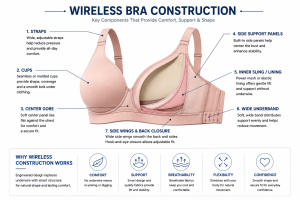
Sports bras provide support through a combination of structural elements rather than relying on underwires alone.
These elements include:
- Compression fabrics
- Encapsulation cups
- Wide underbands
- Reinforced shoulder straps
- Racerback construction
- High-recovery elastic
Together, these features help stabilize the bust while maintaining comfort during movement.
Comparison Table
Sports Bra vs Regular Bra
| Feature | Sports Bra | Regular Bra |
|---|---|---|
| Exercise Support | ⭐⭐⭐⭐⭐ | ⭐⭐☆☆☆ |
| Moisture Management | ⭐⭐⭐⭐⭐ | ⭐⭐⭐☆☆ |
| Stretch Recovery | ⭐⭐⭐⭐⭐ | ⭐⭐⭐☆☆ |
| Motion Control | ⭐⭐⭐⭐⭐ | ⭐⭐☆☆☆ |
| Everyday Comfort | ⭐⭐⭐⭐☆ | ⭐⭐⭐⭐⭐ |
| Fashion Styling | ⭐⭐⭐☆☆ | ⭐⭐⭐⭐⭐ |
Buyer Tip
For lingerie and activewear brands, offering multiple support levels—rather than a single sports bra style—better meets customer needs and encourages repeat purchases.
Types of Sports Bras
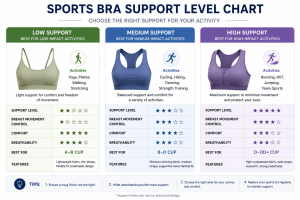
Sports bras can generally be divided into three support categories.
Low Support Sports Bra
Designed for gentle movement.
Best for:
- Yoga
- Walking
- Stretching
- Pilates
Features:
- Soft fabrics
- Lightweight construction
- Flexible fit
Medium Support Sports Bra
Suitable for moderate exercise.
Recommended for:
- Gym workouts
- Hiking
- Cycling
- Dance
Features:
- Wider straps
- Better compression
- Improved stability
High Support Sports Bra
Designed for high-impact activities.
Recommended for:
- Running
- HIIT
- Basketball
- Tennis
- CrossFit
Features:
- Maximum compression
- Reinforced construction
- Wide underband
- Secure fit
Common Construction Types
Sports bras also differ in how they provide support.
| Construction | Best For |
|---|---|
| Compression | Smaller bust sizes |
| Encapsulation | Medium to large bust sizes |
| Hybrid | High-impact activities |
Different constructions offer varying levels of comfort, movement control, and shaping.
Benefits of Wearing a Sports Bra
Understanding what is a sports bra also means understanding why it is an essential part of activewear rather than simply an alternative to a regular bra.
A well-designed sports bra helps improve comfort, reduce breast movement, and support the body during exercise.
Improved Motion Control
During physical activity, the breasts naturally move in multiple directions. Excessive movement can cause discomfort and affect exercise performance.
Sports bras are engineered to minimize movement through:
- Compression
- Encapsulation
- Reinforced underbands
- Stabilizing shoulder straps
The appropriate level of support depends on the type of exercise being performed.
Better Comfort During Exercise
Unlike many everyday bras, sports bras are designed specifically for movement.
Key comfort features include:
- Soft elastic bands
- Flatlock seams
- Moisture-wicking fabrics
- Breathable mesh panels
- Stretch recovery materials
These features help reduce friction during long workouts.
Moisture Management
Sweat management is another important difference between sports bras and regular bras.
Many sports bras use technical fabrics that help:
- Move moisture away from the skin
- Improve airflow
- Dry more quickly
- Reduce overheating
These characteristics improve comfort during both indoor and outdoor exercise.
Improved Stability
A supportive sports bra helps keep the bust stable while allowing the body to move naturally.
Better stability can improve confidence during activities such as:
- Running
- Jumping
- Tennis
- CrossFit
- Aerobic training
Types of Sports Bra Construction
Sports bras provide support through different construction methods.
Compression Sports Bras
Compression bras press the breasts gently against the chest wall to reduce movement.
Best For
- Yoga
- Walking
- Pilates
- Small to medium bust sizes
Advantages
- Lightweight
- Comfortable
- Simple construction
- Easy to wear
Encapsulation Sports Bras
Encapsulation bras support each breast separately using molded or structured cups.
Best For
- Running
- High-impact exercise
- Medium to fuller bust sizes
Advantages
- Better shape
- Increased support
- Improved comfort during long workouts
Hybrid Sports Bras
Hybrid designs combine compression with encapsulation.
These products have become increasingly popular because they balance comfort, stability, and natural shaping.
Best For
- HIIT
- Basketball
- Tennis
- Cross-training
- Professional fitness
Choosing the Right Sports Bra for Different Activities
Different exercises require different levels of support.
| Activity | Recommended Support | Suggested Construction |
|---|---|---|
| Walking | Low | Compression |
| Yoga | Low | Compression |
| Pilates | Low | Compression |
| Strength Training | Medium | Hybrid |
| Cycling | Medium | Hybrid |
| Hiking | Medium | Hybrid |
| Running | High | Encapsulation |
| HIIT | High | Hybrid |
| Basketball | High | Encapsulation |
📍 Insert Image:
Product Development Tips for Brands
Rather than offering one universal sports bra, successful activewear brands often build collections around different activity levels.
| Collection | Target User | Key Features |
|---|---|---|
| Everyday Active | Casual wear | Lightweight, soft fabrics |
| Studio Collection | Yoga & Pilates | Flexible, breathable |
| Training Collection | Gym & Cycling | Medium support |
| Performance Collection | Running & HIIT | High support, moisture management |
| Professional Collection | Competitive sports | Maximum stability and durability |
This product strategy helps brands serve a wider range of consumers while improving merchandising opportunities.
Common Buying Mistakes
Consumers often select sports bras based on appearance rather than functionality.
Wearing Low Support for Running
Low-support bras are generally unsuitable for high-impact sports because they provide insufficient motion control.
Choosing a Sports Bra That Is Too Tight
Excessive compression may reduce comfort and restrict movement.
A sports bra should feel supportive without limiting normal breathing or shoulder movement.
Ignoring Moisture Management
For regular workouts, breathable and moisture-wicking fabrics are just as important as support.
Replacing Support with Thick Padding
Extra padding does not necessarily improve stability. Proper construction and fabric performance play a much larger role.
Expert Insight
Support level should always match activity intensity.
Increasing compression alone does not guarantee better performance. Effective sports bras balance fabric recovery, strap design, underband stability, and cup construction to deliver both comfort and motion control across different types of exercise.
How to Choose the Right Sports Bra
Selecting the right sports bra depends on your activity level, body type, and personal comfort preferences. A bra that works well for yoga may not provide enough support for running or high-impact training.
Consider Your Activity Level
The intensity of your workout should be the first consideration.
| Activity Level | Recommended Support |
|---|---|
| Low Impact | Low Support |
| Moderate Impact | Medium Support |
| High Impact | High Support |
Choosing the correct support level helps improve comfort and reduce unnecessary breast movement.
Choose the Right Construction
Different construction methods provide different support characteristics.
| Construction | Advantages | Best For |
|---|---|---|
| Compression | Lightweight, simple | Yoga, walking |
| Encapsulation | Better shape and stability | Running, tennis |
| Hybrid | Comfort + maximum support | HIIT, CrossFit |
There is no single “best” construction. The ideal choice depends on the intended activity and the wearer’s support requirements.
Focus on Fabric Performance
Modern sports bras rely on technical fabrics to improve comfort during exercise.
Look for materials that provide:
- Moisture management
- Four-way stretch
- Fast drying
- Soft skin feel
- Excellent recovery
Performance fabrics help maintain support even after repeated washing and intensive use.
Sports Bra Trends
Sports bras continue to evolve beyond traditional athletic apparel.
Current market trends include:
- Seamless construction
- Removable padding
- Bonded technology
- Sustainable fabrics
- Lightweight compression
- Inclusive sizing
- Multi-functional activewear
Many consumers now wear sports bras not only for exercise but also for travel, casual wear, and working from home.
Frequently Asked Questions
What is a sports bra?
A sports bra is a supportive garment specifically designed to reduce breast movement during physical activity. It combines technical fabrics, supportive construction, and moisture management to improve comfort and stability.
Can I wear a sports bra every day?
Yes. Many low- and medium-support sports bras are comfortable enough for everyday wear. However, choosing a style that matches your daily activities is important for long-term comfort.
Which sports bra is best for running?
Running usually requires a high-support sports bra with either encapsulation or hybrid construction to minimize movement during high-impact exercise.
What is the difference between compression and encapsulation sports bras?
Compression sports bras reduce movement by holding the breasts close to the body, while encapsulation sports bras support each breast individually using structured cups. Hybrid designs combine both approaches for enhanced support.
How often should a sports bra be replaced?
With regular use, most sports bras should be replaced every 6–12 months, depending on fabric recovery, elasticity, and washing frequency. Signs of wear include stretched bands, reduced support, and fabric distortion.
Conclusion
Understanding what is a sports bra helps consumers choose products that provide the right balance of comfort, support, and performance.
Whether designed for yoga, gym training, or high-impact sports, a well-constructed sports bra improves stability and allows greater freedom of movement. By selecting the appropriate support level, construction type, and technical fabrics, both consumers and brands can achieve better long-term performance and satisfaction.
Related Reading
Continue Reading
Bra Types
- What Is a Wireless Bra?
https://www.brasfactory.com/what-is-a-wireless-bra/ - What Is a Push-Up Bra?
https://www.brasfactory.com/what-is-a-push-up-bra/
Product Comparisons
- Wireless Bra vs Underwire Bra
https://www.brasfactory.com/wireless-bra-vs-underwire-bra/ - Push-Up Bra vs T-Shirt Bra
https://www.brasfactory.com/push-up-bra-vs-t-shirt-bra/
Product Development
- Best Fabrics for Wireless Bras
https://www.brasfactory.com/best-fabrics-for-wireless-bras/ - How Wireless Bras Are Made
https://www.brasfactory.com/how-wireless-bras-are-made/
Industry Resources
- OEKO-TEX® Standard 100
https://www.oeko-tex.com/en/our-standards/oeko-tEX-standard-100 - Textile Exchange
https://textileexchange.org/ - Grand View Research
https://www.grandviewresearch.com/
Need OEM or Private Label Sports Bra Manufacturing?
Planning to develop your own sports bra collection? BrasFactory provides OEM and private label manufacturing services, including activewear product development, technical fabric sourcing, sample production, quality control, and global export support.
👉 Contact Us
https://www.brasfactory.com/contact/