
Molded Cup vs Cut and Sew Bra: Which Is Better for Your Collection?

Molded Cup vs Cut-and-Sew Bra: Which Is Better for Your Collection?

A brand is developing a new bra.

The design direction is clear.
The target customer is defined.
The fabric has been selected.

Then comes an important construction decision:

Should the bra use a molded cup or a cut-and-sew cup?

At first glance, this may appear to be mainly an aesthetic choice.

A molded cup looks smooth.

A cut-and-sew cup has visible seams.

But from a product-development perspective, the difference goes much deeper.

Cup construction can influence:

  • breast shape;
  • support;
  • fit;
  • size range;
  • fabric options;
  • design flexibility;
  • sample development;
  • production method;
  • the final appearance under clothing.

Neither construction is automatically better.

The right choice depends on what the brand wants the bra to achieve.


First: What Is a Molded Cup Bra?

A molded cup bra uses cups that have been shaped into a three-dimensional form.

Instead of creating the cup shape primarily by sewing several fabric panels together, the cup itself already has a defined shape.

Many everyday bras and T-shirt bras use molded cups because they can create a smooth appearance under clothing.

Depending on the design, molded cups can be:

  • lightly padded;
  • push-up;
  • wireless;
  • underwired;
  • seamless-looking;
  • covered with different outer fabrics.

The defining characteristic is not necessarily the amount of padding.

It is the pre-formed cup shape.


What Is a Cut-and-Sew Bra?

A cut-and-sew bra creates its cup shape by joining separate fabric panels.

For example, a cup may contain:

  • two panels;
  • three panels;
  • four or more sections.

The seams help transform flat fabric pieces into a three-dimensional cup.

Different seam placements can create different shaping effects.

A cut-and-sew cup might use:

  • a horizontal seam;
  • a vertical seam;
  • a diagonal seam;
  • multiple combined seams.

This gives designers significant control over the structure and appearance of the cup.
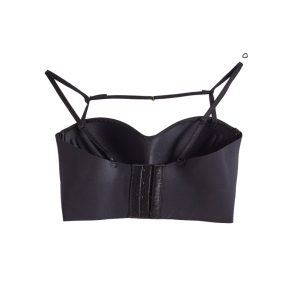
custom bra cup sample development

The Quick Comparison

Development Factor Molded Cup Cut-and-Sew Cup
Surface appearance Smooth Visible seams
T-shirt use Excellent Depends on seam construction
Cup shaping Defined by molded shape Defined by pattern and seams
Design flexibility Moderate High
Lace placement Possible, but construction-dependent Very flexible
Structured support Depends on cup Can be engineered through panels
Fashion detailing More limited Excellent
Pattern adjustment Cup mold is an important constraint Panels can be adjusted individually
Push-up options Very common Also possible
Size development Requires careful cup consistency Pattern/grading driven

But this table only gives the basic picture.

For an OEM project, the decision becomes more interesting.


Scenario 1: You Want a Smooth Everyday T-Shirt Bra

Suppose your product brief says:

“We want a clean everyday bra that disappears underneath a fitted T-shirt.”

In this case, a molded cup is often a logical direction.

Why?

Because there are no cup seams creating lines across the breast.

The smooth surface works particularly well with:

  • fitted tops;
  • office clothing;
  • basic everyday collections;
  • minimalist designs.

A molded cup can also provide consistent shaping even when the wearer is not naturally filling every area of the cup in exactly the same way.

This is one reason molded cups are common in commercial everyday-bra collections.

Likely choice:

Molded cup


Scenario 2: Your Design Uses Decorative Lace Panels

Now imagine a completely different brief:

“We want a romantic lace bra with several contrasting panels and a distinctive cup shape.”

A cut-and-sew construction may provide more design freedom.

Separate cup panels allow a designer to combine materials such as:

  • lace;
  • mesh;
  • microfiber;
  • embroidery;
  • lining.

One panel might use lace while another uses an opaque support fabric.

The seam itself can even become part of the visual design.

Likely choice:

Cut-and-sew cup


Scenario 3: You Want a Strong Push-Up Effect

This one is less straightforward.

Both constructions can create push-up bras.

With a molded cup, the push-up volume can be integrated into the cup structure.

Padding can be concentrated in specific areas to create:

  • upward lift;
  • inward movement;
  • cleavage;
  • additional apparent volume.

This works especially well when the brand wants a smooth push-up bra.

But a cut-and-sew construction can also manipulate breast shape through:

  • panel direction;
  • internal padding;
  • side support;
  • cup seams;
  • lining.

So the correct question isn’t:

“Can a cut-and-sew bra be push-up?”

It can.

The better question is:

What kind of push-up appearance does the collection require?

If the objective is a smooth T-shirt push-up bra, molded construction may be attractive.

If the objective is a lace fashion push-up bra with more visible construction details, cut-and-sew may make more sense.


Shape: One of the Biggest Differences

A molded cup has an existing three-dimensional shape.

This means the breast is being fitted into a predetermined cup form.

A cut-and-sew cup creates shape through panel geometry.

That gives the pattern maker more ways to influence:

  • projection;
  • lift;
  • centering;
  • upper-cup shape;
  • lower-cup volume.

For example, changing the angle of a seam or adjusting one cup panel can alter how the breast is supported.

This can make cut-and-sew construction particularly useful when a brand has a very specific fit objective.


What Happens When the Customer Wants to Change the Cup Shape?

This is an important development difference.

Imagine that the first sample is finished and the customer says:

“We like the bra, but we want more projection at the center of the cup.”

With a cut-and-sew cup, the pattern maker may be able to adjust specific panels and seam shapes.

With a molded cup, the existing cup form itself becomes an important factor.

If the requested change is outside what the existing molded cup can provide, a different cup shape may be required.

This is one reason brands should communicate their target silhouette clearly at the beginning of development.


Does Molded Mean “More Comfortable”?

Not necessarily.

Consumers sometimes associate molded cups with comfort because many popular everyday bras use them.

But comfort depends on much more than cup construction.

A molded bra can still be uncomfortable if:

  • the cup shape does not match the wearer;
  • the underwire is unsuitable;
  • the band is too tight;
  • the cup edge is rigid;
  • the straps are poorly positioned.

Likewise, a well-developed cut-and-sew bra can be extremely comfortable.

Cup construction is only one part of the complete fit system.


Does Cut-and-Sew Mean “More Supportive”?

Again, not automatically.

However, cut-and-sew construction gives designers an opportunity to use different panels for different functions.

For example:

Lower cup:
May provide lift.

Side panel:
May help direct breast tissue inward.

Upper cup:
May control the neckline and accommodate breast volume.

These functions can be engineered through:

  • pattern direction;
  • material stability;
  • lining;
  • seam placement.

This is particularly useful when developing more structured bras.

But a properly engineered molded bra can also provide substantial support.


Fabric Choice Is Different for the Two Constructions

This is where product development becomes more technical.

Molded Cup

The molded cup itself provides much of the shape.

An outer fabric may then be laminated, covered or constructed over the cup depending on the design.

The fabric needs to work with the existing cup shape.

If it is too rigid, it may distort the cup.

If it is too loose, it may wrinkle.

Cut-and-Sew Cup

The fabric itself plays a larger role in creating the cup structure.

Different panels may use different materials.

For example:

  • stable lower cup;
  • stretch lace upper cup;
  • reinforced side panel.

The pattern therefore needs to be developed together with the material properties.


What About Size Range?

This deserves attention early in development.

A construction that works beautifully in a small size may not behave identically when graded into a much larger cup.

As cup volume increases, the product may need changes in:

  • panel proportions;
  • lining;
  • strap width;
  • wing support;
  • elastic;
  • wire;
  • cup structure.

For molded cups, the manufacturer also needs suitable cup shapes across the required size range.

For cut-and-sew bras, pattern grading needs to preserve the intended fit and support as cup volume changes.

Therefore, brands should tell the factory their full intended size range before development begins, not after the first sample has been approved.
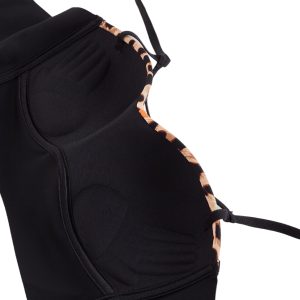
lace cut and sew bra cup design

Which Construction Is Better for Lace?

Cut-and-sew construction offers a lot of freedom for lace designs.

This is especially true when the designer wants to control:

  • lace placement;
  • scalloped edges;
  • transparency;
  • contrasting panels;
  • embroidery placement.

But molded bras can also use lace.

For example, lace may cover a molded cup to combine a smooth underlying shape with a more decorative exterior.

So the choice depends on whether lace is primarily:

a decorative surface

or

part of the structural cup design.


Which Is Better for an Everyday Bra?

For a classic smooth everyday T-shirt bra, molded cups are often a strong option.

But “everyday bra” is a broad category.

An everyday bra could also be:

  • wireless;
  • unlined;
  • lightly lined;
  • lace;
  • full coverage;
  • minimizer;
  • plunge.

Many of these products may use cut-and-sew construction.

The product category alone should not determine the cup construction.

The intended wearing experience should.


Which Is Better for a New Brand?

This is another question with no universal answer.

A new brand might assume:

“We should choose whichever construction is cheaper.”

But development complexity, materials, cup availability, quantities and design requirements all affect the commercial decision.

A better approach is to begin with three questions.

Question 1: What should the customer see?

Smooth and invisible?

Or detailed and fashion-oriented?

Question 2: What should the customer feel?

Soft?

Structured?

Lifted?

Natural?

Compressed?

Question 3: What should the bra do?

Create cleavage?

Provide full coverage?

Support larger cups?

Disappear under clothing?

Once those answers are clear, the construction choice becomes easier.
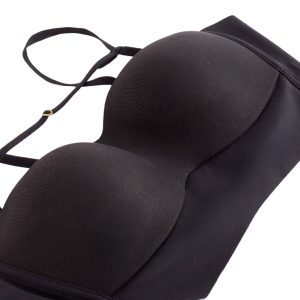
bra cup construction comparison

Don’t Choose Cup Construction From a Photo Alone

This is particularly important when sending reference images to an OEM manufacturer.

A front-view product photo may show what the bra looks like, but it does not necessarily reveal:

  • internal cup structure;
  • lining;
  • padding distribution;
  • seam construction;
  • wire shape;
  • side support.

If you have a physical reference bra that performs exactly the way you want, that can provide useful development information.

If you are developing an original product, a Tech Pack can communicate the intended construction more clearly.


What Should Be Included in a Bra Cup Design Brief?

Before sample development, try to define:

Target customer
Who is wearing the bra?

Product purpose
Everyday, fashion, push-up, full coverage, etc.

Desired shape
Natural, rounded, projected, centered, lifted.

Coverage
Low, medium or full.

Padding
None, light, medium, graduated or push-up.

Cup surface
Smooth or decorative.

Material direction
Lace, microfiber, mesh, performance fabric, etc.

Size range
What sizes will eventually be sold?

This gives the development team a much better starting point than simply requesting:

“Please make a good bra.”


So, Molded Cup or Cut-and-Sew?

A simple way to think about it is:

Consider a Molded Cup When You Want:

  • a smooth appearance;
  • T-shirt compatibility;
  • consistent pre-formed shape;
  • integrated push-up padding;
  • minimalist everyday styling.

Consider Cut-and-Sew When You Want:

  • greater panel-level design flexibility;
  • decorative lace combinations;
  • more control over structural paneling;
  • visible fashion construction;
  • specific shaping through seam placement.

But these are guidelines, not rules.

Many successful bra designs combine ideas from both approaches.

The correct construction should support the fit, appearance and positioning of the product, rather than being chosen simply because one method sounds more premium.
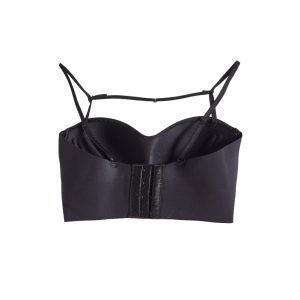
ut and sew bra cup panel construction

From Bra Design to Sample Development

When developing a custom bra, cup construction should ideally be discussed early—before materials, patterns and samples are finalized.

At BrasFactory, our factory in Puning, Guangdong, China works with overseas customers developing OEM and private label bra products.

Customers can provide:

  • original drawings;
  • Tech Packs;
  • reference bras;
  • cup and padding requirements;
  • fabrics;
  • measurement charts;
  • size ranges.

The construction can then be evaluated according to the intended product.

Customer-supplied original designs and development information can also be handled under an NDA when required.

BrasFactory
Puning, Guangdong, China
Website: https://www.brasfactory.com/
Email: Climo@brasfactory.com
WhatsApp / WeChat: +86 131 4874 7185


FAQ

What is the main difference between a molded cup and a cut-and-sew cup?

A molded cup is pre-formed into a three-dimensional shape, while a cut-and-sew cup creates its shape by sewing multiple fabric panels together.

Are molded cups only used for padded bras?

No. Molded cup construction is not defined solely by heavy padding. Different molded constructions can provide different levels of lining and padding.

Which cup is better for a T-shirt bra?

A molded cup is commonly used for T-shirt bras because its smooth surface can reduce visible seam lines under fitted clothing.

Can a cut-and-sew bra be a push-up bra?

Yes. Push-up effects can also be created through cut-and-sew cup construction, padding, side support and pattern design.

Which construction is better for lace bras?

Cut-and-sew cups offer considerable flexibility for structural lace panels, but lace can also be used as an outer covering over molded cups.

Can BrasFactory develop both molded and cut-and-sew bra designs?

The appropriate construction can be evaluated according to the customer’s design, materials, size range and other project requirements.

Molded Cup vs Cut-and-Sew Bra: Which Is Better for Your Collection?A brand is developing a new bra.

The design direction is clear.
The target customer is defined.
The fabric has been selected.

Then comes an important construction decision:

Should the bra use a molded cup or a cut-and-sew cup?

At first glance, this may appear to be mainly an aesthetic choice.

A molded cup looks smooth.

A cut-and-sew cup has visible seams.

But from a product-development perspective, the difference goes much deeper.

Cup construction can influence:

breast shape;
support;
fit;
size range;
fabric options;
design flexibility;
sample development;
production method;
the final appearance under clothing.

Neither construction is automatically better.

The right choice depends on what the brand wants the bra to achieve.

First: What Is a Molded Cup Bra?

A molded cup bra uses cups that have been shaped into a three-dimensional form.

Instead of creating the cup shape primarily by sewing several fabric panels together, the cup itself already has a defined shape.

Many everyday bras and T-shirt bras use molded cups because they can create a smooth appearance under clothing.

Depending on the design, molded cups can be:

lightly padded;
push-up;
wireless;
underwired;
seamless-looking;
covered with different outer fabrics.

The defining characteristic is not necessarily the amount of padding.

It is the pre-formed cup shape.

What Is a Cut-and-Sew Bra?

A cut-and-sew bra creates its cup shape by joining separate fabric panels.

For example, a cup may contain:

two panels;
three panels;
four or more sections.

The seams help transform flat fabric pieces into a three-dimensional cup.

Different seam placements can create different shaping effects.

A cut-and-sew cup might use:

a horizontal seam;
a vertical seam;
a diagonal seam;
multiple combined seams.

This gives designers significant control over the structure and appearance of the cup.

The Quick Comparison
Development Factor	Molded Cup	Cut-and-Sew Cup
Surface appearance	Smooth	Visible seams
T-shirt use	Excellent	Depends on seam construction
Cup shaping	Defined by molded shape	Defined by pattern and seams
Design flexibility	Moderate	High
Lace placement	Possible, but construction-dependent	Very flexible
Structured support	Depends on cup	Can be engineered through panels
Fashion detailing	More limited	Excellent
Pattern adjustment	Cup mold is an important constraint	Panels can be adjusted individually
Push-up options	Very common	Also possible
Size development	Requires careful cup consistency	Pattern/grading driven

But this table only gives the basic picture.

For an OEM project, the decision becomes more interesting.

Scenario 1: You Want a Smooth Everyday T-Shirt Bra

Suppose your product brief says:

“We want a clean everyday bra that disappears underneath a fitted T-shirt.”

In this case, a molded cup is often a logical direction.

Why?

Because there are no cup seams creating lines across the breast.

The smooth surface works particularly well with:

fitted tops;
office clothing;
basic everyday collections;
minimalist designs.

A molded cup can also provide consistent shaping even when the wearer is not naturally filling every area of the cup in exactly the same way.

This is one reason molded cups are common in commercial everyday-bra collections.

Likely choice:

Molded cup

Scenario 2: Your Design Uses Decorative Lace Panels

Now imagine a completely different brief:

“We want a romantic lace bra with several contrasting panels and a distinctive cup shape.”

A cut-and-sew construction may provide more design freedom.

Separate cup panels allow a designer to combine materials such as:

lace;
mesh;
microfiber;
embroidery;
lining.

One panel might use lace while another uses an opaque support fabric.

The seam itself can even become part of the visual design.

Likely choice:

Cut-and-sew cup

Scenario 3: You Want a Strong Push-Up Effect

This one is less straightforward.

Both constructions can create push-up bras.

With a molded cup, the push-up volume can be integrated into the cup structure.

Padding can be concentrated in specific areas to create:

upward lift;
inward movement;
cleavage;
additional apparent volume.

This works especially well when the brand wants a smooth push-up bra.

But a cut-and-sew construction can also manipulate breast shape through:

panel direction;
internal padding;
side support;
cup seams;
lining.

So the correct question isn't:

“Can a cut-and-sew bra be push-up?”

It can.

The better question is:

What kind of push-up appearance does the collection require?

If the objective is a smooth T-shirt push-up bra, molded construction may be attractive.

If the objective is a lace fashion push-up bra with more visible construction details, cut-and-sew may make more sense.

Shape: One of the Biggest Differences

A molded cup has an existing three-dimensional shape.

This means the breast is being fitted into a predetermined cup form.

A cut-and-sew cup creates shape through panel geometry.

That gives the pattern maker more ways to influence:

projection;
lift;
centering;
upper-cup shape;
lower-cup volume.

For example, changing the angle of a seam or adjusting one cup panel can alter how the breast is supported.

This can make cut-and-sew construction particularly useful when a brand has a very specific fit objective.

What Happens When the Customer Wants to Change the Cup Shape?

This is an important development difference.

Imagine that the first sample is finished and the customer says:

“We like the bra, but we want more projection at the center of the cup.”

With a cut-and-sew cup, the pattern maker may be able to adjust specific panels and seam shapes.

With a molded cup, the existing cup form itself becomes an important factor.

If the requested change is outside what the existing molded cup can provide, a different cup shape may be required.

This is one reason brands should communicate their target silhouette clearly at the beginning of development.

Does Molded Mean “More Comfortable”?

Not necessarily.

Consumers sometimes associate molded cups with comfort because many popular everyday bras use them.

But comfort depends on much more than cup construction.

A molded bra can still be uncomfortable if:

the cup shape does not match the wearer;
the underwire is unsuitable;
the band is too tight;
the cup edge is rigid;
the straps are poorly positioned.

Likewise, a well-developed cut-and-sew bra can be extremely comfortable.

Cup construction is only one part of the complete fit system.

Does Cut-and-Sew Mean “More Supportive”?

Again, not automatically.

However, cut-and-sew construction gives designers an opportunity to use different panels for different functions.

For example:

Lower cup:
May provide lift.

Side panel:
May help direct breast tissue inward.

Upper cup:
May control the neckline and accommodate breast volume.

These functions can be engineered through:

pattern direction;
material stability;
lining;
seam placement.

This is particularly useful when developing more structured bras.

But a properly engineered molded bra can also provide substantial support.

Fabric Choice Is Different for the Two Constructions

This is where product development becomes more technical.

Molded Cup

The molded cup itself provides much of the shape.

An outer fabric may then be laminated, covered or constructed over the cup depending on the design.

The fabric needs to work with the existing cup shape.

If it is too rigid, it may distort the cup.

If it is too loose, it may wrinkle.

Cut-and-Sew Cup

The fabric itself plays a larger role in creating the cup structure.

Different panels may use different materials.

For example:

stable lower cup;
stretch lace upper cup;
reinforced side panel.

The pattern therefore needs to be developed together with the material properties.

What About Size Range?

This deserves attention early in development.

A construction that works beautifully in a small size may not behave identically when graded into a much larger cup.

As cup volume increases, the product may need changes in:

panel proportions;
lining;
strap width;
wing support;
elastic;
wire;
cup structure.

For molded cups, the manufacturer also needs suitable cup shapes across the required size range.

For cut-and-sew bras, pattern grading needs to preserve the intended fit and support as cup volume changes.

Therefore, brands should tell the factory their full intended size range before development begins, not after the first sample has been approved.

Which Construction Is Better for Lace?

Cut-and-sew construction offers a lot of freedom for lace designs.

This is especially true when the designer wants to control:

lace placement;
scalloped edges;
transparency;
contrasting panels;
embroidery placement.

But molded bras can also use lace.

For example, lace may cover a molded cup to combine a smooth underlying shape with a more decorative exterior.

So the choice depends on whether lace is primarily:

a decorative surface

or

part of the structural cup design.

Which Is Better for an Everyday Bra?

For a classic smooth everyday T-shirt bra, molded cups are often a strong option.

But “everyday bra” is a broad category.

An everyday bra could also be:

wireless;
unlined;
lightly lined;
lace;
full coverage;
minimizer;
plunge.

Many of these products may use cut-and-sew construction.

The product category alone should not determine the cup construction.

The intended wearing experience should.

Which Is Better for a New Brand?

This is another question with no universal answer.

A new brand might assume:

“We should choose whichever construction is cheaper.”

But development complexity, materials, cup availability, quantities and design requirements all affect the commercial decision.

A better approach is to begin with three questions.

Question 1: What should the customer see?

Smooth and invisible?

Or detailed and fashion-oriented?

Question 2: What should the customer feel?

Soft?

Structured?

Lifted?

Natural?

Compressed?

Question 3: What should the bra do?

Create cleavage?

Provide full coverage?

Support larger cups?

Disappear under clothing?

Once those answers are clear, the construction choice becomes easier.

Don't Choose Cup Construction From a Photo Alone

This is particularly important when sending reference images to an OEM manufacturer.

A front-view product photo may show what the bra looks like, but it does not necessarily reveal:

internal cup structure;
lining;
padding distribution;
seam construction;
wire shape;
side support.

If you have a physical reference bra that performs exactly the way you want, that can provide useful development information.

If you are developing an original product, a Tech Pack can communicate the intended construction more clearly.

What Should Be Included in a Bra Cup Design Brief?

Before sample development, try to define:

Target customer
Who is wearing the bra?

Product purpose
Everyday, fashion, push-up, full coverage, etc.

Desired shape
Natural, rounded, projected, centered, lifted.

Coverage
Low, medium or full.

Padding
None, light, medium, graduated or push-up.

Cup surface
Smooth or decorative.

Material direction
Lace, microfiber, mesh, performance fabric, etc.

Size range
What sizes will eventually be sold?

This gives the development team a much better starting point than simply requesting:

“Please make a good bra.”

So, Molded Cup or Cut-and-Sew?

A simple way to think about it is:

Consider a Molded Cup When You Want:
a smooth appearance;
T-shirt compatibility;
consistent pre-formed shape;
integrated push-up padding;
minimalist everyday styling.
Consider Cut-and-Sew When You Want:
greater panel-level design flexibility;
decorative lace combinations;
more control over structural paneling;
visible fashion construction;
specific shaping through seam placement.

But these are guidelines, not rules.

Many successful bra designs combine ideas from both approaches.

The correct construction should support the fit, appearance and positioning of the product, rather than being chosen simply because one method sounds more premium.

From Bra Design to Sample Development

When developing a custom bra, cup construction should ideally be discussed early—before materials, patterns and samples are finalized.

At BrasFactory, our factory in Puning, Guangdong, China works with overseas customers developing OEM and private label bra products.

Customers can provide:

original drawings;
Tech Packs;
reference bras;
cup and padding requirements;
fabrics;
measurement charts;
size ranges.

The construction can then be evaluated according to the intended product.

Customer-supplied original designs and development information can also be handled under an NDA when required.

BrasFactory
Puning, Guangdong, China
Website: https://www.brasfactory.com/
Email: Climo@brasfactory.com
WhatsApp / WeChat: +86 131 4874 7185

FAQ
What is the main difference between a molded cup and a cut-and-sew cup?

A molded cup is pre-formed into a three-dimensional shape, while a cut-and-sew cup creates its shape by sewing multiple fabric panels together.

Are molded cups only used for padded bras?

No. Molded cup construction is not defined solely by heavy padding. Different molded constructions can provide different levels of lining and padding.

Which cup is better for a T-shirt bra?

A molded cup is commonly used for T-shirt bras because its smooth surface can reduce visible seam lines under fitted clothing.

Can a cut-and-sew bra be a push-up bra?

Yes. Push-up effects can also be created through cut-and-sew cup construction, padding, side support and pattern design.

Which construction is better for lace bras?

Cut-and-sew cups offer considerable flexibility for structural lace panels, but lace can also be used as an outer covering over molded cups.

Can BrasFactory develop both molded and cut-and-sew bra designs?

The appropriate construction can be evaluated according to the customer's design, materials, size range and other project requirements.
Molded Cup vs Cut-and-Sew Bra: Which Is Better for Your Collection?