How Seamless Bras Are Made: Step-by-Step Manufacturing Process
H2 Executive Summary
Unlike traditional bras that are assembled from multiple cut-and-sewn fabric panels, seamless bras are produced using advanced circular knitting technology. This innovative manufacturing method reduces seams, improves comfort, and creates a smooth, flexible fit.
The seamless bra production process combines computerized knitting, precision finishing, and strict quality control to deliver products that meet modern consumers’ expectations for comfort, durability, and style.
If you’re new to seamless lingerie, start with What Is a Seamless Bra?
If you’d like to understand material selection before exploring production, read Best Fabrics for Seamless Bras
H2 What Makes Seamless Bra Manufacturing Different?
Traditional bra production relies heavily on cutting fabric panels and sewing them together.
Seamless bras are different because most of the garment is knitted as a single structure using computerized circular knitting machines.
This manufacturing method offers several advantages:
- Fewer seams
- Improved flexibility
- Better stretch recovery
- Higher production consistency
- Reduced fabric waste
These characteristics have made seamless bras one of the fastest-growing categories in modern lingerie.
Image 1
Circular Knitting Machine
ALT
Computerized circular knitting machine used in seamless bra manufacturing.
Caption
Figure 1. Modern circular knitting technology produces seamless bra structures with minimal seams and excellent elasticity.
H2 Step 1 – Yarn Selection
Every seamless bra begins with carefully selected yarns.
Common materials include:
- Nylon
- Spandex
- Polyester
- Microfiber
- Recycled Nylon
- Modal blends
Each material influences:
- Elasticity
- Softness
- Breathability
- Durability
- Moisture management
High-quality yarns are essential because they determine both comfort and long-term performance.
H2 Step 2 – Circular Knitting
Circular knitting is the defining stage of seamless bra production.
Computer-controlled knitting machines create different compression zones, support structures, and body panels without relying on multiple sewn pieces.
Benefits include:
- Consistent quality
- Smooth appearance
- Efficient production
- Reduced sewing operations
Image 2
Circular Knitting Process Diagram
ALT
Diagram showing the circular knitting process used to manufacture seamless bras.
Caption
Figure 2. Circular knitting creates integrated bra structures that minimize seams while maintaining flexibility and support.
H2 Step 3 – Dyeing & Heat Setting
After knitting, the garments are dyed according to customer color requirements.
Heat setting stabilizes the fabric, ensuring:
- Shape retention
- Consistent sizing
- Improved elasticity
- Long-term durability
This process also prepares the garments for finishing and assembly.
H2 Step 4 – Cutting & Component Assembly
Although the main body is seamless, additional components are still required.
These may include:
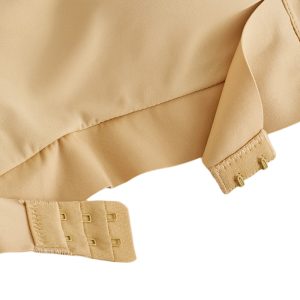
- Shoulder straps
- Elastic underbands
- Hook-and-eye closures
- Removable pads
- Decorative trims
Each component is attached according to product specifications.
Image 3
Seamless Bra Component Assembly
ALT
Assembly process showing shoulder straps, elastic underband, and hook-and-eye closure added to a seamless bra.
Caption
Figure 3. Final assembly combines the knitted bra body with functional components to complete the product.
H2 Step 5 – Quality Inspection
Every production batch should undergo quality control before shipment.
Typical inspections include:
- Size measurements
- Stretch recovery
- Fabric defects
- Color consistency
- Stitch quality
- Label verification
- Packaging inspection
Quality control helps ensure that every seamless bra meets customer specifications and international manufacturing standards.
H2 Step 6 – Final Finishing
After assembly, each seamless bra goes through a finishing process to improve appearance and prepare it for packaging.
Typical finishing procedures include:
- Thread trimming
- Steam shaping
- Cup positioning
- Logo inspection
- Label attachment
- Final appearance check
These steps ensure that every product meets the required visual and quality standards before shipment.
H2 Step 7 – Packaging & Shipping
Once inspection is complete, products are packed according to customer requirements.
Packaging options include:
- Individual poly bags
- Recycled packaging
- Printed retail boxes
- Hang tags
- Barcode labels
- Carton packaging for export
OEM manufacturers also provide customized packaging to support private label brands.
Image 4
Final Quality Inspection
ALT
Quality control inspection of seamless bras before packaging and export.
Caption
Figure 4. Every seamless bra undergoes inspection for sizing, fabric quality, stitching, labeling, and packaging before shipment.
H2 Seamless Bra Manufacturing Workflow
The manufacturing process can be summarized as follows:
Yarn Selection
        │
        ▼
Circular Knitting
        │
        ▼
Dyeing
        │
        ▼
Heat Setting
        │
        ▼
Cutting
        │
        ▼
Component Assembly
        │
        ▼
Quality Inspection
        │
        ▼
Packaging
        │
        ▼
Worldwide Shipping
H2 OEM Development Process
Private label seamless bra development usually follows these stages:
| Stage | Description |
|---|---|
| Product Consultation | Define target market and product requirements |
| Fabric & Yarn Selection | Choose suitable materials |
| Sample Development | Produce prototype samples |
| Fit Evaluation | Test sizing and comfort |
| Sample Approval | Confirm final specifications |
| Bulk Production | Begin mass manufacturing |
| Final Inspection | Perform quality checks |
| Delivery | Arrange export and logistics |
A structured development process helps reduce production risks and improve product consistency.
H2 Production Timeline
| Production Stage | Estimated Time |
|---|---|
| Product Consultation | 1–3 Days |
| Material Selection | 2–5 Days |
| Sample Development | 7–15 Days |
| Sample Approval | 3–7 Days |
| Bulk Production | 30–45 Days |
| Quality Inspection | 1–3 Days |
| Packaging & Shipping | Depending on destination |
Actual lead times vary according to order quantity, customization requirements, and seasonal production schedules.
H2 Buyer Checklist
When choosing a seamless bra manufacturer, buyers should evaluate more than production capacity.
Important considerations include:
✔ Circular knitting capability
✔ Stable yarn suppliers
✔ Sample development service
✔ OEM & Private Label experience
✔ Quality management system
✔ Custom packaging options
✔ International export experience
✔ Consistent production capacity
H2 Common Manufacturing Challenges
H3 Inconsistent Yarn Quality
Variations in yarn quality can affect elasticity, appearance, and durability.
Reliable sourcing helps maintain consistent production.
H3 Incorrect Machine Settings
Circular knitting machines require precise programming.
Improper settings may result in uneven compression zones or sizing inconsistencies.
H3 Insufficient Quality Inspection
Without comprehensive quality control, defects may not be identified until products reach customers.
A structured inspection process helps minimize this risk.
H3 Poor Fit Testing
Even with advanced knitting technology, fit testing remains essential to ensure comfort and proper support across different sizes.
H2 Expert Insight
Modern seamless bra manufacturing depends on the integration of advanced knitting technology, premium yarns, and rigorous quality control. While circular knitting machines improve production efficiency, the final product quality is equally influenced by material selection, machine programming, finishing techniques, and inspection standards. For OEM and private label brands, working with an experienced manufacturer can significantly reduce development time and improve consistency across production batches.
H2 Frequently Asked Questions
H3 How are seamless bras different from traditional bras?
Traditional bras are made by cutting multiple fabric panels and sewing them together. Seamless bras are primarily produced using computerized circular knitting machines, which create much of the garment as a single knitted structure. This results in fewer seams, greater flexibility, and a smoother appearance.
H3 What machines are used to manufacture seamless bras?
Most seamless bras are manufactured using advanced circular knitting machines. These machines are programmed to create different knitting zones, compression areas, and support structures within one continuous fabric tube, reducing the need for multiple sewing operations.
H3 Which materials are commonly used?
The most frequently used materials include:
- Nylon
- Spandex (Elastane)
- Polyester
- Microfiber
- Modal blends
- Recycled nylon
Choosing the right yarn combination has a direct impact on elasticity, comfort, durability, and moisture management.
If you’d like to learn more about fabric selection, read Best Fabrics for Seamless Bras
H3 Can seamless bras be customized?
Yes.
OEM manufacturers can customize:
- Fabric composition
- Yarn color
- Knitting pattern
- Cup style
- Shoulder straps
- Logo
- Labels
- Packaging
- Size range
These services help brands develop products tailored to different markets.
H3 How long does seamless bra production take?
Production time varies depending on the order size and level of customization.
Typical lead times are:
- Sampling: 7–15 days
- Bulk production: 30–45 days
Additional time may be required for custom packaging or special materials.
H3 Why is quality inspection important?
Quality inspection helps ensure:
- Accurate sizing
- Stable elasticity
- Consistent color
- Reliable stitching
- Correct labeling
- Packaging compliance
A structured quality control process reduces defects and improves customer satisfaction.
H2 Conclusion
Seamless bra manufacturing combines advanced knitting technology with carefully selected materials and strict quality control to produce lingerie that is comfortable, durable, and visually refined.
From yarn selection and circular knitting to finishing and packaging, every production stage contributes to the final product’s performance. Understanding this process allows consumers to appreciate the technology behind seamless bras while helping brands make better decisions when developing new collections.
Working with an experienced OEM manufacturer also ensures greater consistency, faster product development, and reliable large-scale production.
H2 Continue Reading
Seamless Bra Knowledge Hub
- What Is a Seamless Bra
- Seamless Bra vs Wireless Bra
- Best Fabrics for Seamless Bras
- Seamless Bra Manufacturer
Related Manufacturing Guides
- Wireless Bra Manufacturer
- Sports Bra Manufacturer
- What Is a Wireless Bra
- Best Fabrics for Wireless Bras
- What Is a Sports Bra
- Sports Bra vs Regular Bra
H2 Industry Resources
The following organizations provide valuable information on textile standards, manufacturing, and sustainable materials:
- OEKO-TEX® STANDARD 100
- Textile Exchange
- Global Recycled Standard (GRS)
- ASTM International
- Grand View Research
H2 Develop Your Seamless Bra Collection
BrasFactory provides complete OEM and private label manufacturing solutions for seamless bra brands worldwide.
Our Manufacturing Services
- Seamless Product Development
- Circular Knitting Technology
- Yarn & Fabric Sourcing
- Sample Development
- Pattern Engineering
- OEM Manufacturing
- Private Label Solutions
- Quality Inspection
- Export Documentation
- Worldwide Shipping
Whether you’re developing a fashion-focused seamless bra collection or a high-performance comfort line, our engineering and production teams can support your project from concept to delivery.
Contact BrasFactory
https://www.brasfactory.com/contact/