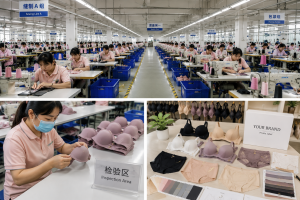
Custom Seamless Bras: OEM Design & Manufacturing Guide
Part 1
The global demand for customized lingerie continues to grow as brands seek unique products that reflect their identity and stand out in competitive markets. Instead of selling standard products available to everyone, many companies are investing in custom seamless bras to create exclusive collections tailored to their customers.
Custom seamless bras allow businesses to control every aspect of product development—from fabric selection and support level to colors, branding, packaging, and sizing. This flexibility enables brands to build stronger customer loyalty while offering products that cannot be easily compared with competitors.
For startups, wholesalers, retailers, sportswear brands, and established lingerie companies, working with an experienced seamless bra manufacturer makes product customization both practical and cost-effective.
In this guide, you’ll learn how custom seamless bras are developed, what customization options are available, how OEM manufacturing works, and how to choose the right manufacturing partner for your brand.
What Are Custom Seamless Bras?
Custom seamless bras are bras manufactured according to a customer’s unique specifications rather than purchased as standard products.
Unlike simple private label projects that mainly change logos and packaging, custom manufacturing allows brands to modify the product itself.
Customization may include:
- Fabric composition
- Compression level
- Bra construction
- Cup shape
- Strap width
- Back closure
- Elastic strength
- Color combinations
- Brand logo
- Retail packaging
Because every market has different customer preferences, customized products help brands create collections that better meet local demand.
Why More Brands Choose Custom Manufacturing
Competition within the lingerie industry continues to increase every year.
Simply offering low prices is no longer enough to build a successful business.
Custom seamless bras provide several important advantages.
Unique Brand Identity
Customized products help customers recognize your brand instead of comparing products only by price.
Better Customer Experience
You can develop products specifically for your target audience, improving fit, comfort, and overall satisfaction.
Higher Profit Margins
Exclusive products generally allow stronger pricing strategies because they cannot be directly compared with mass-produced alternatives.
Greater Product Flexibility
Brands can develop collections for:
- Sports
- Yoga
- Everyday wear
- Nursing
- Lounge
- Teen collections
- Plus-size collections
This flexibility supports long-term business growth.
OEM Design Process
Developing custom seamless bras normally follows several important stages.
Product Consultation
Customers discuss their business goals, target market, and product requirements with the manufacturer.
Topics usually include:
- Product positioning
- Target customers
- Budget
- Estimated order quantities
- Market expectations
Clear communication during this stage helps establish realistic development plans.
Technical Design
Once product requirements are confirmed, engineers prepare technical specifications.
These may include:
- Measurements
- Compression zones
- Fabric structure
- Cup dimensions
- Stitching methods
- Elastic placement
A detailed technical package reduces misunderstandings during production.
Material Selection
Selecting appropriate materials is one of the most important decisions during product development.
Popular options include:
- Nylon + Spandex
- Recycled Nylon
- Recycled Polyester
- Moisture-wicking yarns
- Antibacterial fabrics
- Cooling fibers
Material selection directly affects comfort, durability, elasticity, and product performance.
Prototype Development
After technical approval, the factory develops the first sample.
Customers evaluate:
- Appearance
- Fit
- Support
- Elasticity
- Fabric quality
- Branding
- Overall comfort
Sample revisions continue until the product fully meets customer expectations.
Design Customization Options
One of the greatest advantages of developing custom seamless bras is the ability to tailor every product detail to your brand’s positioning and your customers’ expectations.
Rather than selecting standard products from a catalog, custom manufacturing gives brands complete control over the design process.
Fabric Customization
Fabric selection is one of the first decisions during product development because it directly affects comfort, durability, elasticity, and performance.
Popular fabric options include:
- Nylon & Spandex blends
- Recycled nylon
- Recycled polyester
- Moisture-wicking yarns
- Cooling fabrics
- Antibacterial yarns
- Soft-touch microfiber
Different markets require different fabric solutions. Sports bras often prioritize moisture management and compression, while everyday seamless bras focus on softness and comfort.
Color Development
Color customization allows brands to build a recognizable product line.
Manufacturers can provide:
- Standard colors
- Pantone color matching
- Seasonal collections
- Fashion trend colors
- Custom dyeing services
Using consistent brand colors helps strengthen product recognition across different collections.
Cup Construction
Depending on the target market, seamless bras can be developed with different cup structures.
Options include:
- Removable padding
- Fixed molded cups
- Push-up cups
- Light support cups
- Medium support
- High-impact support
The appropriate structure depends on product positioning and customer preferences.
Strap Design
Shoulder straps significantly influence both comfort and appearance.
Customers may customize:
- Strap width
- Adjustable straps
- Racerback styles
- Cross-back designs
- Convertible straps
- Decorative straps
These design elements allow brands to create products for sports, everyday wear, or fashion collections.
Size Development
Professional manufacturers should support customized size grading based on the target market.
Common sizing systems include:
- US sizes
- EU sizes
- UK sizes
- Asian sizes
Proper grading ensures consistent fit across all sizes while improving customer satisfaction and reducing product returns.
Branding and Packaging Solutions
Brand presentation is just as important as product quality.
Professional manufacturers should provide complete branding services that create a consistent customer experience.
Typical branding options include:
- Heat transfer logos
- Silicone logos
- Woven labels
- Printed care labels
- Hang tags
- Retail boxes
- Poly bags
- Barcode stickers
- Instruction cards
Customized packaging helps increase perceived product value while strengthening brand recognition.
Sample Development Process
Before mass production begins, manufacturers develop samples for customer approval.
The process normally includes:
Step 1 – Product Evaluation
Engineers review the design concept and confirm technical feasibility.
Step 2 – Material Preparation
Required yarns, elastic components, accessories, and trims are prepared according to product specifications.
Step 3 – Prototype Production
The first sample is produced using production-grade equipment.
Customers evaluate:
- Appearance
- Fit
- Comfort
- Stretch
- Support
- Logo placement
- Packaging
Step 4 – Sample Revision
Customer feedback is incorporated before final approval.
This stage helps eliminate production issues before bulk manufacturing begins.
Flexible MOQ Solutions
Many startup brands assume customized products always require very large minimum orders.
In reality, MOQ depends on several factors.
These include:
- Number of colors
- Fabric availability
- Customized accessories
- Packaging requirements
- Printing methods
- Production complexity
Experienced manufacturers often recommend practical alternatives for smaller brands, such as using stock materials or simplifying packaging during the first production run.
These strategies reduce investment while maintaining product quality.
Production Quality Control
Quality control is essential because every product carries your brand name.
Professional manufacturers inspect products throughout the manufacturing process rather than relying only on final inspections.
Inspection normally includes:
- Material inspection
- Yarn inspection
- Knitting inspection
- Sewing inspection
- Cup inspection
- Measurement verification
- Stretch testing
- Appearance inspection
- Packaging inspection
A structured quality management system improves consistency and helps reduce product returns.
Production Lead Time
A well-planned production schedule is essential for launching new collections on time. Whether you are preparing for a seasonal promotion, a retail launch, or a wholesale shipment, reliable lead times help you manage inventory and customer expectations more effectively.
Although production schedules vary depending on the level of customization and order quantity, a typical project follows this timeline:
| Production Stage | Estimated Time |
|---|---|
| Product Consultation | 1–3 Days |
| Sample Development | 7–15 Days |
| Sample Approval | 3–7 Days |
| Material Preparation | 10–15 Days |
| Bulk Production | 25–40 Days |
| Quality Inspection | 2–5 Days |
| Packaging & Shipping | 5–7 Days |
Manufacturers with mature production management systems provide regular updates throughout the process, allowing brands to plan marketing campaigns and product launches with confidence.
How to Choose the Right Custom Seamless Bra Manufacturer
Not every factory has the capability to develop customized seamless bras. Choosing the right manufacturing partner requires evaluating technical expertise, production capacity, and long-term reliability.
Manufacturing Experience
Experience is one of the strongest indicators of production quality.
Ask potential suppliers:
- How many years have you produced seamless bras?
- What percentage of your business involves OEM projects?
- Which international markets do you currently supply?
- Can you share previous customization projects?
Factories with extensive export experience are generally better prepared to meet international quality standards.
Product Development Team
Custom manufacturing requires more than production equipment.
An experienced development team should provide:
- Design consultation
- Pattern optimization
- Material recommendations
- Fit improvements
- Technical problem-solving
Strong development support helps brands reduce product development time while improving final product quality.
Advanced Production Equipment
Modern seamless bra production depends on specialized machinery.
Look for manufacturers equipped with:
- Computerized circular knitting machines
- Automatic cup molding equipment
- Heat-setting machines
- Digital pattern systems
- Professional quality inspection equipment
Advanced technology improves consistency, efficiency, and production accuracy.
Quality Management
Reliable manufacturers maintain standardized inspection procedures covering every stage of production.
A complete quality management system should include:
- Incoming material inspection
- In-process inspections
- Finished product inspections
- Random shipment inspections
Factories with structured quality systems typically achieve lower defect rates and greater customer satisfaction.
Communication and Customer Support
Good communication helps prevent misunderstandings throughout the project.
Choose manufacturers that:
- Respond promptly
- Provide detailed quotations
- Confirm specifications clearly
- Share production updates
- Resolve issues efficiently
Strong communication often leads to smoother production and stronger long-term partnerships.
Why Choose BrasFactory?
At BrasFactory, we help brands transform ideas into successful seamless bra collections through professional OEM and private label manufacturing services.
Our strengths include:
- Experienced seamless bra manufacturing
- Professional product development support
- Flexible OEM and private label solutions
- Advanced seamless knitting technology
- Strict quality control procedures
- Stable production capacity
- International export experience
- Responsive project management
Whether you are creating a new startup brand or expanding an established lingerie collection, our team works closely with you from product development to final delivery.
Our goal is to build long-term partnerships by delivering consistent quality, reliable service, and efficient manufacturing solutions.
Conclusion
Custom seamless bras give brands the opportunity to develop products that truly reflect their identity while meeting the changing needs of today’s consumers.
From fabric selection and structural design to branding, packaging, and quality control, every stage of customization contributes to creating a unique and competitive product.
Choosing an experienced seamless bra manufacturer ensures that your ideas are transformed into high-quality products supported by professional engineering, reliable production planning, and international manufacturing experience.
Whether your goal is to launch a private label collection, expand your activewear range, or develop premium seamless lingerie, investing in custom manufacturing is an effective strategy for long-term brand growth.
Frequently Asked Questions
What are custom seamless bras?
Custom seamless bras are designed and manufactured according to a brand’s unique specifications, including fabrics, colors, support levels, logos, packaging, and sizing.
Can I customize the logo and packaging?
Yes. Most OEM manufacturers provide custom logos, woven labels, printed care labels, hang tags, retail packaging, and branded shipping cartons.
What is the difference between custom manufacturing and private label?
Private label mainly focuses on branding existing products, while custom manufacturing allows brands to modify the product design, materials, construction, and technical specifications.
What is the typical MOQ for custom seamless bras?
MOQ depends on product complexity, materials, colors, and customization requirements. Manufacturers often provide flexible solutions based on project needs.
How long does product development usually take?
Sample development typically requires 7–15 days, followed by revisions if necessary. Bulk production generally takes 25–40 days after sample approval.
Contact to our team for your own branding,