
A custom bra manufacturer helps a lingerie brand turn a product concept into a repeatable manufacturing specification. Customization can involve much more than changing color or adding a logo. The silhouette, cup, fabric, lace, padding, wire, straps, elastics, hardware and branding can all be developed around a specific market position.
The challenge is converting creative ideas into technical decisions. The most efficient projects define what the bra needs to achieve before choosing individual decorative details.
[PICTURE 1 — Featured Image]
Define the Customer Before Defining the Bra
A good custom-development brief begins with the wearer. A comfort-focused everyday bra, a fashion push-up style and a high-support product have very different priorities.
Useful starting questions include: What level of support is expected? What clothing will the bra be worn under? What size range is planned? Is the desired appearance smooth, lace-focused, minimal or highly structured?
Create a Product Brief That a Factory Can Use
A mood board can communicate style, but production requires more specific information. A useful brief may contain sketches, a reference bra, target measurements, material preferences, target retail positioning, color references and logo artwork.
If some technical details are not yet known, identify which characteristics are essential and which can be proposed by the manufacturer.
Decide the Level of Customization
Not every project needs a completely new construction. Some brands can begin with an existing base structure and customize the fabric, lace, straps, colors and branding. Others require an original cup, pattern and fit.
The correct approach depends on product differentiation, development budget and timeline.
Select Cup Construction According to the Product Goal
Molded, spacer and cut-and-sew cups offer different advantages. Molded cups can produce a smooth profile under clothing. Cut-and-sew cups can combine panels and fabrics for shaping and support. Spacer materials provide a lightweight structured option for certain products.
Choosing a cup only because it looks attractive in a reference photo can lead to the wrong performance.
Material Development Is Functional
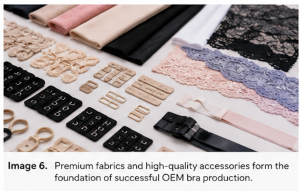
Every fabric has a job. A stretch lace may be decorative and flexible, while a stronger power mesh may be required in the wing. Cup lining may need stability even when the outer cup fabric is soft.
Straps and elastics must also match the intended support level and size range.
For related material information, see Bra Manufacturer vs Trading Company: Which Is Better for Your Brand?.
Small Components Influence the Finished Product
Rings, sliders, hooks, eyes, wire channels and elastic widths can affect comfort, durability and appearance. Hardware also needs to be coordinated with the product’s color direction.
When brands develop larger sizes, component strength becomes even more important.
Develop a Controlled First Sample
The first sample should test the major decisions: silhouette, cup, neckline, band, materials and construction. It is not efficient to focus first on a tiny decorative detail while the underlying fit is still changing.
A factory may use development materials in early samples if the final custom material is not yet available. When this happens, the difference should be documented.
Fit Is More Important Than Flat Measurements Alone
Measurements are essential, but bras need to be evaluated three-dimensionally. Two bras with identical flat measurements can behave differently because of fabric recovery, cup profile and elastic tension.

A fitting review should consider containment, neckline, center front, underarm, wing stability, strap position and comfort.
Use Version-Controlled Comments
Each sample round should have a version number and a clear list of requested changes. This prevents confusion when several people are involved in approvals.
For example, V2 comments can state that cup volume is approved while the strap position and wing height still need adjustment. V3 can then focus on those remaining issues.
Plan the Commercial Size Range Early
A brand should not wait until the final base-size sample is approved before thinking about the full size range. Larger cups may require more support, wider straps, different elastics or additional reinforcement.
Related development considerations are discussed in How to Choose a Reliable Bra Manufacturer in China for Your Lingerie Brand.
Customization Changes MOQ and Cost
Custom materials, special colors, exclusive lace, molded components and branded hardware can introduce supplier minimums. An MOQ may therefore come from the fabric or trim supplier rather than from sewing capacity alone.
Brands can reduce unnecessary complexity by prioritizing the custom features that have the greatest impact on the customer.
For further sourcing and cost context, see How to Choose a Reliable Bra Manufacturer in China for Your Lingerie Brand.
Approve the Product Before Finalizing Branding
Labels and packaging are important, but the underlying bra should be proven first. A beautiful hangtag cannot solve a cup or band problem.
Once the product is technically approved, woven labels, care labels, hangtags, polybags and cartons can be finalized around the production specification.
How to Evaluate a Custom Bra Manufacturer
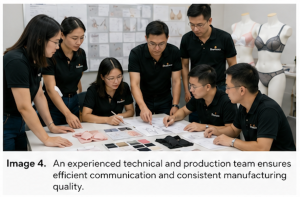
Ask whether the factory regularly produces the type of bra you are developing, how it handles sample revisions, how materials are sourced, how specifications are documented and how bulk quality is controlled.
Related manufacturer-selection information can be found in How to Choose a Sports Bra Manufacturer for Your Brand and How to Start Your Own Lingerie Brand with a Private Label Manufacturer.
Custom Development With BrasFactory
BrasFactory develops OEM and private-label bras from our factory in Puning, Guangdong. Buyers can begin with a reference sample, Tech Pack, design concept or existing product that needs modification.
The clearer the target fit and product function, the more efficiently the technical development process can proceed.
For another relevant BrasFactory resource, see OEM Bra Manufacturer | Custom OEM Bra Manufacturing Services.
Frequently Asked Questions
Do I need a Tech Pack for a custom bra?
A detailed Tech Pack is helpful, but a physical reference sample plus clear modification instructions can also provide a strong starting point.
Can I customize only fabric and branding?
Yes. Not every project requires a new pattern. Some programs use an existing structure and customize the visual and branding elements.
Can the factory recommend materials?
A specialist manufacturer can propose options, but the buyer should still approve final stretch, appearance, hand feel and performance before bulk production.
How to Prioritize Custom Features
Brands often begin a project with a long list of ideas: new cup shape, special lace, custom elastic, unique hardware, exclusive colors, printed lining and premium packaging. While all of these may be possible, developing every element at once can increase cost and complexity.
A more practical approach is to identify the features that define the product. For one brand, the key point may be a distinctive neckline and soft wireless fit. For another, the main differentiation may be a specific push-up cup effect. Once the core value is clear, secondary details can be added around it.
Reference Products Can Be Combined
A brand does not always need one reference bra that contains every desired characteristic. It can provide several references and explain the purpose of each one.
For example, one bra may demonstrate the preferred cup and fit, another may show the desired strap construction, and a third may provide inspiration for the lace layout. The factory can then evaluate how these elements can be combined into one manufacturable design.
Custom Colors Require Planning
Color development can create additional lead time, especially when multiple materials must match. Lace, microfiber, elastic, straps and hooks may come from different suppliers, so achieving a consistent color family can require lab dips, swatches or approved standards.
Brands should therefore decide whether exact custom colors are essential for the first production order or whether carefully selected stock colors can reduce complexity.
Packaging Should Match the Sales Channel
A product designed for direct-to-consumer ecommerce may require different packaging from a product sold through physical retail stores. Ecommerce programs may prioritize efficient polybags, barcode labels and shipping protection, while retail programs may require hangers, boxes or more detailed presentation.
Defining the sales channel early helps the manufacturer prepare the correct packing specification.
Repeatability Is the Final Goal of Custom Development
A successful custom bra is not only one sample that fits well. The real objective is to create a specification that can be repeated across production and future orders.
This is why final measurements, materials, construction details and approved components should be documented. The more precisely the approved product is defined, the easier it is to maintain consistency when production quantities increase.