
A high impact sports bra manufacturer helps brands turn a product concept into a repeatable production specification. The development process should begin with the intended customer, product function, size range, materials, target order quantity and quality expectations rather than appearance alone.
For high impact sports bra, the factory and brand should agree on the performance target before bulk production. That includes the construction method, fit priorities, component behavior and the tests that will be used to approve samples.
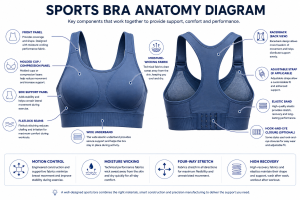
Start With a Clear Product Brief
A useful brief should identify reference products, target measurements, size range, materials, colorways, branding, packaging and expected order quantity. Clear priorities reduce unnecessary sample rounds and make quotations more reliable.
Related BrasFactory development information is available in About and Blog.
Material Selection Affects Fit and Performance
Stretch, recovery, weight, thickness, hand feel and color consistency can change how a bra performs. Materials that look similar can behave differently in wear, so production-intent fabrics and elastics should be approved before bulk cutting.
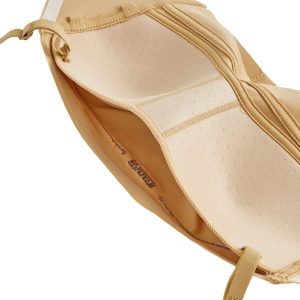
Sampling Should Solve Structural Issues First
The first sample should be used to identify major fit and construction issues. Structural corrections should be resolved before small decorative details, because cup volume, band tension, neckline position and strap placement can influence one another.
Sample-development guidance can also be found in Contact Lifan Bras – OEM Bra Manufacturer.
Size Range Needs Early Planning
A design that performs well in one base size may not behave the same way across a broad commercial range. Larger and smaller sizes can require changes in cup geometry, strap width, elastic strength, reinforcement or component dimensions.
MOQ Is More Than a Sewing Minimum
Minimum order quantity may be influenced by fabric mills, lace suppliers, elastic dyeing, molded cups, labels, packaging and color quantities. A focused first assortment can reduce fragmentation and simplify material purchasing.
For sourcing and production context, see Home.
Movement Control
High-impact support should control motion through the combined effect of cups, band, straps and back structure. During development, the brand should document the target result, compare revisions against the approved reference and confirm that any material or construction change does not create a new fit problem.
This stage is also a good time to review production feasibility, cost implications and how the specification will be repeated across future orders.
Underband Stability
The band anchors the garment and should remain stable during repeated movement. During development, the brand should document the target result, compare revisions against the approved reference and confirm that any material or construction change does not create a new fit problem.
This stage is also a good time to review production feasibility, cost implications and how the specification will be repeated across future orders.
Cup and Panel Engineering
Molded, spacer or multi-panel cups can be combined with reinforcement to improve control and shaping. During development, the brand should document the target result, compare revisions against the approved reference and confirm that any material or construction change does not create a new fit problem.
This stage is also a good time to review production feasibility, cost implications and how the specification will be repeated across future orders.
Representative Size Testing
High-impact products should be fitted across representative sizes because support loads change with size. During development, the brand should document the target result, compare revisions against the approved reference and confirm that any material or construction change does not create a new fit problem.
This stage is also a good time to review production feasibility, cost implications and how the specification will be repeated across future orders.
Closure Security
Front zips, hooks and adjustment systems must remain secure under dynamic movement. During development, the brand should document the target result, compare revisions against the approved reference and confirm that any material or construction change does not create a new fit problem.
This stage is also a good time to review production feasibility, cost implications and how the specification will be repeated across future orders.
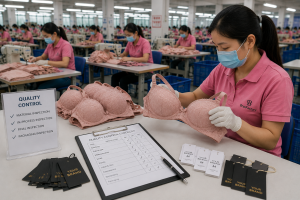
Quality Control Should Match the Product Risk
Inspection should cover measurements, symmetry, workmanship, elastic attachment, cup and strap consistency, labels and packing. When performance depends on stretch components, material substitutions should be controlled carefully.
External Standards and References
Brands can define their own market and testing requirements. A useful external reference is OEKO-TEX.
How to Work Efficiently With a Manufacturer
Consolidate feedback, identify which comments are critical, and keep an approved record of materials, measurements and construction. This makes future repeat orders easier and reduces the risk of rebuilding the same specification from old emails.
Additional BrasFactory resources are available through Shop and Best Fabrics for Push-Up Bras: How to Choose the Right Material.
BrasFactory Development Approach
BrasFactory supports OEM and private-label bra development from our factory in Puning, Guangdong. Projects can begin with a physical reference sample, technical specification or design concept and should progress through controlled sampling, fitting and production approval.
Frequently Asked Questions
Can development start from a reference sample?
Yes. A reference can help communicate fit, construction and material expectations, while the final specification should document any requested changes.
Should final materials be tested before bulk production?
Yes. Material behavior can affect fit, recovery, appearance and durability, so production-intent materials should be reviewed before final approval.
Can branding and packaging be added for private label production?
Yes. Labels, hangtags and packaging can be incorporated when artwork, dimensions and placement requirements are confirmed before production.
Additional Technical Considerations
Movement Control as a System
High-impact support should come from the combined effect of cup structure, compression, underband stability, straps and back construction. Simply making the garment tighter can create discomfort without delivering controlled movement. The support architecture should be defined during the initial technical brief.
Underband Stability
The underband anchors the garment around the torso and should remain stable during repeated movement. Its width, circumference and elastic recovery need to be balanced. If the band migrates, rolls or stretches excessively, the rest of the support system becomes less effective.
Cup and Panel Engineering
High-impact products may use molded cups, spacer cups, cut-and-sew cups or multi-layer support panels. The correct option depends on the desired silhouette, separation, breathability and movement control. Cup volume should contain the breast securely without overflow or excessive compression.
Strap Load Management
Strap width, stretch, attachment position and back geometry all affect load distribution. Racerback and cross-back designs can increase stability in some applications, while adjustable straps provide flexibility across body proportions. Hardware should remain secure under dynamic movement.
Performance Materials
High-impact bras typically require strong stretch recovery. Power mesh, performance knits, linings and elastics should be treated as a coordinated material system. Moisture management and surface comfort also matter because the product may be worn during prolonged exercise.
Representative Movement Testing
Running, jumping and directional movement can reveal failures that do not appear during static fitting. Brands should record band displacement, breast movement, strap migration, neckline security, rubbing and pressure. The test method should remain consistent across sample revisions.
Grading Across Larger Sizes
A design that performs well in a middle size may need structural adjustments as cup volume increases. Wider straps, stronger back panels, different hardware or additional reinforcement may be required. Representative sizes should therefore be fitted across the commercial range.
Bulk Production Controls
Quality inspection should confirm critical measurements, cup symmetry, band dimensions, strap attachment, closures, stitching, elastics and component security. Material substitutions should be tightly controlled because small differences in recovery can change support performance.
When evaluating a high impact sports bra project, the most reliable approach is to document the approved sample, final materials, measurements, construction and quality expectations in one controlled specification. This gives the factory and the brand a shared reference for bulk production and future repeat orders.