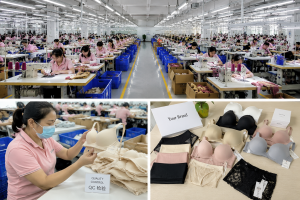
Private Label Bra Factory in China | OEM Manufacturing Services
Private Label Bra Factory China is one of the most searched solutions for international lingerie brands looking for reliable OEM and private label manufacturing partners. China has become one of the world’s leading manufacturing centers for lingerie, supplying bras to international brands, wholesalers, retailers, distributors, and e-commerce businesses across North America, Europe, Australia, and the Middle East.
For companies planning to launch or expand their own lingerie collections, working with a professional private label bra factory in China offers an efficient and cost-effective solution. Instead of investing in production facilities, brands can focus on product development, marketing, and customer service while relying on experienced manufacturers for stable production and quality management.
Private label manufacturing enables businesses to sell bras under their own brand name while benefiting from advanced manufacturing technology, established supply chains, and experienced engineering teams. Whether you are creating an everyday bra collection, sports bras, seamless bras, or wireless bras, an experienced Chinese factory can help transform your ideas into market-ready products.
In this guide, we’ll explain how private label bra manufacturing works, why many international brands choose China, and how to select the right manufacturing partner for long-term success.
What Is a Private Label Bra Factory?
A private label bra factory manufactures bras that are sold under the customer’s own brand instead of the factory’s name.
Unlike trading companies that primarily source products from multiple suppliers, a professional factory manages production directly, allowing better control over quality, lead time, and customization.
Typical private label services include:
- Custom brand logos
- Woven labels
- Printed care labels
- Hang tags
- Retail packaging
- Poly bags
- Barcode stickers
- Carton printing
These services allow brands to establish a professional market presence while maintaining complete ownership of their brand identity.
Why Choose a Private Label Bra Factory in China?
China continues to attract international buyers because of its mature manufacturing ecosystem and strong export capabilities.
Complete Supply Chain
China’s lingerie industry benefits from a highly developed supply chain.
Manufacturers have easy access to:
- Yarn suppliers
- Fabric mills
- Elastic manufacturers
- Molded cup suppliers
- Accessory producers
- Packaging companies
This integrated network reduces production costs while improving efficiency.
Advanced Manufacturing Technology
Leading factories invest heavily in:
- Computerized seamless knitting machines
- Automatic cup molding systems
- Digital pattern software
- Fabric inspection equipment
- Professional testing laboratories
Modern equipment improves consistency while supporting large-scale production.
Flexible OEM and Private Label Services
Professional manufacturers support different business models, including:
- OEM manufacturing
- Private label production
- Product customization
- Sample development
- Packaging design
- Export logistics
This flexibility allows brands to develop collections that meet different market requirements.
Competitive Manufacturing Costs
Thanks to efficient production systems and integrated supply chains, Chinese factories can provide competitive pricing while maintaining international quality standards.
Rather than competing only on cost, many manufacturers now focus on delivering higher-value OEM and private label services.
Industries We Serve
A professional private label bra factory supports customers across multiple industries.
These include:
- Lingerie brands
- Fashion retailers
- Activewear companies
- Department stores
- Chain retailers
- Online sellers
- Amazon businesses
- Boutique brands
- Wholesale distributors
Each customer receives manufacturing solutions tailored to their product strategy and target market.
OEM vs Private Label Manufacturing
Although the two terms are often used together, they describe different manufacturing approaches.
OEM Manufacturing
OEM services allow customers to customize nearly every aspect of product development.
Customization includes:
- Product structure
- Fabric selection
- Cup design
- Support level
- Sizing
- Packaging
Private Label Manufacturing
Private label focuses primarily on branding existing products.
Typical customization includes:
- Logo printing
- Labels
- Hang tags
- Retail packaging
- Brand identity
Many businesses begin with private label manufacturing before expanding into full OEM product development.
Complete Private Label Manufacturing Process
Launching a successful private label bra collection requires a structured manufacturing process. A professional private label bra factory in China should provide support from the initial consultation to final shipment, ensuring product quality and efficient communication throughout every stage.
Step 1 – Project Consultation
Every project begins with understanding the customer’s business goals.
During the consultation, manufacturers discuss:
- Target market
- Product categories
- Brand positioning
- Sales channels
- Estimated order quantity
- Budget expectations
Based on this information, the factory recommends suitable manufacturing solutions and development plans.
Step 2 – Product Development
Once the project requirements are confirmed, engineers begin product development.
Customers may provide:
- Design sketches
- Technical packs
- Reference samples
- Product photos
- Size specifications
The engineering team evaluates the feasibility of each design and recommends improvements when necessary to optimize production efficiency and product performance.
Step 3 – Material Selection
Choosing the right materials is one of the most important steps in private label manufacturing.
Professional factories help customers select suitable:
- Fabrics
- Yarn compositions
- Elastic bands
- Molded cups
- Hooks and eyes
- Decorative accessories
- Labels
- Packaging materials
Material selection should balance comfort, durability, product positioning, and production cost.
Step 4 – Sample Development
Before bulk production begins, sample development allows customers to verify every product detail.
The first sample is inspected for:
- Overall appearance
- Fit
- Comfort
- Support
- Stretch recovery
- Logo placement
- Packaging
If adjustments are required, revised samples are produced until final approval is received.
This process minimizes production risks and ensures the finished products meet customer expectations.
Branding and Packaging Solutions
Private label manufacturing focuses on helping customers build their own brand identity.
Professional factories provide a wide range of branding services.
Logo Options
Common branding methods include:
- Heat transfer logos
- Silicone logos
- Woven labels
- Printed labels
- Jacquard logos
Each method is selected according to the product style and brand positioning.
Retail Packaging
Customized packaging improves the customer experience and strengthens brand recognition.
Packaging options include:
- Poly bags
- Printed gift boxes
- Hang tags
- Barcode stickers
- Care instruction cards
- Carton printing
Professional packaging also supports retail display and e-commerce fulfillment.
Flexible Minimum Order Quantity (MOQ)
MOQ varies depending on several production factors rather than following one standard quantity.
These factors include:
- Product style
- Number of colors
- Material availability
- Customized trims
- Logo printing
- Packaging requirements
For startup brands and small businesses, manufacturers often recommend simplifying customization during the first production run to reduce costs while maintaining high product quality.
As the brand grows, more advanced customization can be introduced in future orders.
Quality Control Throughout Production
Every product carries the customer’s brand name, making quality consistency essential.
Professional factories implement quality control procedures throughout the manufacturing process.
Inspection normally includes:
Raw Material Inspection
Checking:
- Fabric quality
- Yarn consistency
- Elastic performance
- Accessories
- Packaging materials
Production Inspection
Monitoring:
- Knitting quality
- Sewing accuracy
- Cup molding
- Product measurements
- Logo application
Final Product Inspection
Inspectors evaluate:
- Product appearance
- Measurements
- Stitching
- Elasticity
- Packaging
- Carton labeling
Random sampling inspections are also completed before shipment to verify production consistency.
Production Capacity
An experienced private label bra factory should have sufficient production capacity to support customers at different stages of business growth.
Typical production capabilities include:
- Multiple production lines
- Advanced seamless knitting equipment
- Independent sewing workshops
- Professional quality inspection teams
- Stable raw material inventory
Scalable production capacity allows brands to increase order volumes without changing manufacturing partners.
Lead Time
Reliable scheduling is essential for successful product launches.
A typical production timeline includes:
| Production Stage | Estimated Time |
|---|---|
| Project Consultation | 1–3 Days |
| Sample Development | 7–15 Days |
| Sample Approval | 3–7 Days |
| Material Preparation | 10–15 Days |
| Bulk Production | 25–40 Days |
| Quality Inspection | 2–5 Days |
| Packaging & Shipping | 5–7 Days |
Production schedules may vary depending on customization requirements, order quantities, and seasonal demand.
Professional factories provide regular production updates to ensure customers remain informed throughout the manufacturing process.
How to Choose the Right Private Label Bra Factory in China
Choosing the right manufacturing partner can have a significant impact on your brand’s long-term success. Beyond competitive pricing, a reliable factory should offer technical expertise, stable quality, efficient communication, and dependable delivery.
Before making your decision, consider the following factors.
Manufacturing Experience
An experienced factory understands both production requirements and international market expectations.
Ask questions such as:
- How many years have you been manufacturing bras?
- Which countries do you export to?
- What percentage of your business is OEM or private label?
- What bra categories do you specialize in?
Manufacturers with extensive export experience are generally better prepared to support international brands.
Product Development Capability
A professional factory should provide more than manufacturing services.
Look for suppliers that can assist with:
- Product design consultation
- Material recommendations
- Pattern optimization
- Sample development
- Fit improvements
- Technical documentation
Strong development capabilities help brands shorten product launch cycles while improving overall product quality.
Manufacturing Equipment
Modern bra production depends on advanced equipment and efficient production systems.
Reliable factories invest in:
- Computerized seamless knitting machines
- Automatic cup molding equipment
- Digital pattern systems
- Fabric inspection machines
- Product testing equipment
Advanced manufacturing technology improves consistency while supporting efficient large-scale production.
Quality Management System
Quality should be monitored throughout every production stage rather than only before shipment.
Professional factories normally implement:
- Incoming material inspection
- In-process quality inspection
- Finished product inspection
- Random shipment inspection
A structured quality management system reduces production risks while ensuring consistent quality across every order.
Communication and Customer Service
Clear communication is essential for successful OEM and private label projects.
Professional manufacturers should:
- Respond promptly to inquiries
- Confirm specifications clearly
- Provide transparent quotations
- Share production progress regularly
- Resolve technical questions efficiently
Strong communication helps build long-term business partnerships based on trust and reliability.
Why Choose BrasFactory?
BrasFactory is committed to helping international brands build successful lingerie collections through professional OEM and private label manufacturing services.
We work with startups, wholesalers, retailers, distributors, and established fashion brands across global markets.
Our advantages include:
- Professional private label manufacturing
- OEM product development
- Advanced seamless knitting technology
- Experienced engineering team
- Flexible customization options
- Strict quality control procedures
- Stable production capacity
- Competitive pricing
- Worldwide export experience
- Dedicated project management
From initial product development to final shipment, our team provides comprehensive manufacturing solutions designed to support long-term business growth.
Global Export Experience
BrasFactory supplies private label bras to customers in markets around the world.
Our export destinations include:
- North America
- Europe
- Australia
- Southeast Asia
- The Middle East
- South America
We are familiar with international packaging standards, product labeling requirements, customs documentation, and global logistics procedures, helping customers receive products efficiently and reliably.
Conclusion
Working with a professional private label bra factory in China enables brands to develop high-quality lingerie collections while reducing manufacturing complexity and production risks.
Through advanced production technology, experienced engineering support, flexible customization, and strict quality management, an experienced factory becomes more than a supplier—it becomes a long-term manufacturing partner.
Whether you are launching your first lingerie brand or expanding an existing product line, choosing the right private label manufacturer provides a solid foundation for sustainable business growth and long-term success.
Frequently Asked Questions
What is a private label bra factory?
A private label bra factory manufactures bras that are sold under the customer’s own brand, offering services such as custom logos, labels, packaging, and branding.
Can I customize my bra designs?
Yes. Professional factories provide OEM and private label services, allowing customers to customize fabrics, cup structures, logos, labels, packaging, colors, and sizing.
What is the MOQ for private label bras?
MOQ depends on product style, materials, customization requirements, and packaging. Flexible production solutions are often available for new brands.
How long does production usually take?
Sample development generally requires 7–15 days, while bulk production typically takes 25–40 days after final sample approval.
Does BrasFactory export internationally?
Yes. We export worldwide and assist customers with shipping documentation, customs procedures, and international logistics coordination.