
Seamless Bra Manufacturing Process: From Yarn to Finished Product
Part 1
Consumers often appreciate the comfort and smooth appearance of seamless bras without realizing the advanced manufacturing technology behind them. Unlike traditional bras that rely heavily on cutting and sewing multiple fabric panels together, seamless bras are produced using sophisticated computerized knitting equipment that creates highly elastic garments with minimal seams.
This innovative production method not only improves wearing comfort but also increases manufacturing efficiency, reduces material waste, and allows brands to develop products with advanced functional features such as compression zones, ventilation panels, and moisture management.
For lingerie brands, wholesalers, and private label businesses, understanding the seamless bra manufacturing processis essential when selecting an OEM supplier. A manufacturer with advanced production technology and strict quality management can significantly improve product consistency while reducing production risks.
In this guide, we explain every stage of seamless bra production—from yarn selection and computerized knitting to molding, quality control, packaging, and international shipping.
Why Seamless Manufacturing Is Different
Traditional bras are usually produced by cutting multiple fabric panels before sewing them together.
A seamless bra follows a completely different production method.
Instead of assembling many individual pieces, advanced computerized circular knitting machines create large sections of the bra as a single knitted structure.
This manufacturing technology provides several advantages.
Better Wearing Comfort
Fewer stitched seams reduce pressure points against the skin, making seamless bras ideal for all-day wear.
Higher Production Efficiency
Computerized knitting machines automate much of the production process while maintaining consistent product quality.
Better Elasticity
Integrated knitted structures provide natural stretch without requiring excessive sewing operations.
Modern Product Design
Manufacturers can integrate ventilation areas, support zones, and decorative knitted patterns directly into the garment.
These advantages explain why seamless bras have become increasingly popular across lingerie, activewear, yoga apparel, and everyday comfort collections.
Step 1: Product Design and Technical Development
Every seamless bra begins with product planning.
Before production starts, manufacturers work closely with customers to define product specifications.
The development stage normally includes:
- Product sketches
- Technical drawings
- Target market analysis
- Fabric requirements
- Support level
- Cup structure
- Size range
- Logo placement
- Packaging requirements
Professional development teams evaluate whether the proposed design is suitable for seamless knitting technology and recommend adjustments where necessary.
Careful planning during this stage helps avoid production issues later.
Step 2: Yarn Selection
Unlike conventional garment production that begins with finished fabrics, seamless bra manufacturing starts with selecting specialized yarns.
The quality of the yarn directly influences:
- Stretch performance
- Recovery
- Breathability
- Durability
- Softness
- Moisture management
Common yarn materials include:
- Nylon
- Polyester
- Spandex
- Recycled nylon
- Recycled polyester
- Functional cooling yarns
- Antibacterial fibers
Manufacturers select yarns according to product performance requirements and customer specifications.
Step 3: Computerized Circular Knitting
This is the core technology behind seamless bra manufacturing.
Modern computerized circular knitting machines produce the main body of the bra as an integrated knitted structure.
Unlike traditional cut-and-sew construction, this process significantly reduces the number of sewn seams.
Benefits include:
- Consistent product quality
- Improved elasticity
- Reduced fabric waste
- Higher production efficiency
- Better wearing comfort
Advanced knitting software also allows engineers to create different compression levels and ventilation zones within a single garment without adding extra fabric layers.
Step 4: Cup Molding and Heat Forming
After the seamless bra body is knitted, the next stage is cup molding. This process gives the bra its final shape and support while maintaining a smooth, natural appearance.
Specialized molding machines use controlled heat and pressure to form the cups according to the approved design.
Manufacturers carefully monitor several factors during this stage:
- Molding temperature
- Pressure settings
- Forming time
- Cup symmetry
- Shape consistency
Accurate molding is essential because it directly affects comfort, support, and the overall fit of the finished bra.
Premium seamless bras often undergo multiple quality checks after molding to ensure every cup meets the required specifications.
Step 5: Sewing and Assembly
Although seamless bras contain significantly fewer seams than traditional bras, several components still require precise manual or semi-automatic assembly.
Typical assembly work includes:
- Attaching shoulder straps
- Sewing hook-and-eye closures
- Installing elastic bands
- Adding removable pads or molded cups
- Sewing labels
- Attaching decorative accessories
Professional technicians ensure each component is positioned accurately and securely.
Poor assembly may lead to issues such as uneven straps, twisted elastics, or reduced durability, making this stage an important part of the manufacturing process.
Step 6: Dyeing and Finishing
Depending on the production method, seamless bras may be knitted using pre-dyed yarns or dyed after knitting.
Professional dyeing processes aim to achieve:
- Consistent color
- Excellent color fastness
- Soft fabric hand feel
- Minimal shrinkage
- Long-lasting appearance
Many premium seamless bras also receive functional finishing treatments.
Common finishing options include:
- Moisture-wicking treatment
- Antibacterial finishing
- Anti-odor treatment
- UV protection
- Soft-touch finishing
- Anti-pilling treatment
These value-added treatments improve product performance while helping brands differentiate themselves in competitive markets.
Step 7: Quality Control Throughout Production
Quality control is not a single inspection performed before shipment. Professional manufacturers monitor quality throughout every production stage to minimize defects and maintain consistency.
A typical quality control system includes:
Incoming Material Inspection
Before production begins, inspectors verify:
- Yarn quality
- Fabric elasticity
- Color consistency
- Accessories
- Labels
- Packaging materials
Only approved materials enter production.
In-Process Inspection
During knitting and assembly, inspectors monitor:
- Knitting accuracy
- Compression zones
- Fabric appearance
- Cup alignment
- Stitching quality
Early inspection reduces waste and improves manufacturing efficiency.
Performance Testing
Because seamless bras rely heavily on elasticity, manufacturers often perform additional testing, including:
- Stretch recovery
- Elastic retention
- Washing durability
- Color fastness
- Pilling resistance
- Dimensional stability
These tests help ensure products maintain their performance throughout repeated wear and washing.
Final Inspection
Before packaging, inspectors conduct a complete review of finished products.
Inspection items include:
- Product appearance
- Measurements
- Logo placement
- Cup symmetry
- Stitching quality
- Packaging accuracy
- Carton labeling
Random sampling inspections are also conducted before shipment to verify batch consistency.
Step 8: Packaging and Export Preparation
Once products pass quality inspection, they move to the packaging department.
Packaging requirements vary depending on customer preferences.
Typical options include:
- Individual poly bags
- Custom printed bags
- Retail gift boxes
- Barcode labels
- Hang tags
- Care instruction cards
- Master cartons
Professional manufacturers carefully follow customer packaging specifications to ensure products arrive ready for retail distribution.
Before shipment, export documentation is also prepared.
Common documents include:
- Commercial Invoice
- Packing List
- Bill of Lading
- Certificate of Origin (when required)
- Customs Declaration Documents
Accurate documentation helps avoid customs delays and supports smooth international delivery.
Step 9: International Shipping
After production and packaging are complete, orders are shipped according to the customer’s logistics requirements.
Common shipping methods include:
Sea Freight
The most economical solution for large-volume orders.
Suitable for wholesalers, distributors, and long-term inventory planning.
Air Freight
Recommended for urgent replenishment orders or new product launches where faster delivery is required.
Express Courier
DHL, FedEx, UPS, and TNT are commonly used for sample shipments and small production orders.
Professional manufacturers usually assist customers in selecting the most cost-effective shipping solution based on order size, destination, and delivery schedule.
Why Advanced Manufacturing Technology Matters
As consumer expectations continue to rise, manufacturing technology has become one of the biggest competitive advantages in the lingerie industry. Buyers no longer focus only on price—they also expect consistent sizing, premium comfort, long-lasting durability, and reliable product quality.
Modern seamless bra manufacturing technology allows factories to produce products with greater precision while improving production efficiency.
The advantages include:
- More consistent sizing
- Better fabric utilization
- Reduced material waste
- Higher production efficiency
- Improved wearing comfort
- Stronger product durability
- Better production consistency
For brands, these improvements translate into fewer customer complaints, lower return rates, and stronger brand reputation.
Manufacturers that continuously invest in advanced equipment and production technology are generally better positioned to support long-term business growth.
How to Choose a Factory with Strong Manufacturing Capabilities
Understanding the manufacturing process also helps buyers evaluate potential suppliers more effectively.
Rather than selecting a factory based only on price, consider the following factors before making a decision.
Production Experience
Experience plays an important role in maintaining stable quality.
Ask potential suppliers:
- How many years have you manufactured seamless bras?
- What percentage of your production focuses on seamless products?
- Which international markets do you currently serve?
- Can you provide OEM or private label case studies?
Factories with extensive export experience usually have more mature production systems.
Manufacturing Equipment
Reliable manufacturers invest continuously in production technology.
Look for factories equipped with:
- Computerized circular knitting machines
- Automatic cup molding machines
- Heat-setting equipment
- Fabric inspection systems
- Digital pattern software
- Quality testing equipment
Modern machinery improves both productivity and product consistency.
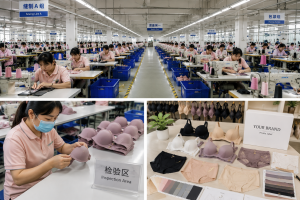
A strong quality management system should cover every production stage rather than relying only on final inspection.
Professional manufacturers typically implement:
- Incoming material inspection
- In-process quality control
- Finished product inspection
- Random shipment inspection
- Continuous production monitoring
Structured quality management reduces production risks while ensuring every shipment meets customer expectations.
Communication and Technical Support
Successful OEM manufacturing depends on clear communication.
Choose manufacturers that:
- Respond quickly to inquiries
- Provide detailed quotations
- Confirm technical specifications clearly
- Share production progress regularly
- Resolve problems efficiently
Reliable communication helps build long-term partnerships while reducing production delays.
Conclusion
The seamless bra manufacturing process combines advanced knitting technology, premium materials, skilled craftsmanship, and strict quality management to create products that meet today’s consumer expectations for comfort, performance, and durability.
From product development and yarn selection to computerized knitting, molding, quality inspection, packaging, and international shipping, every production stage contributes to the quality of the final product.
Understanding how seamless bras are manufactured enables brands to make better sourcing decisions, evaluate suppliers more effectively, and build stronger partnerships with experienced OEM manufacturers.
Whether you are developing a new seamless lingerie collection or expanding an existing product line, selecting a factory with advanced manufacturing capabilities is one of the most important investments in your brand’s long-term success.
Frequently Asked Questions
How are seamless bras manufactured?
Seamless bras are primarily manufactured using computerized circular knitting machines. After knitting, they undergo molding, assembly, quality inspection, packaging, and shipment.
What materials are used in seamless bra production?
The most common materials include nylon, polyester, spandex, recycled fibers, and performance yarns designed for stretch, moisture management, and durability.
Why are seamless bras more comfortable?
Because seamless bras contain fewer stitched seams, they reduce friction against the skin while providing better flexibility and a smoother fit.
Can seamless bras be customized?
Yes. Professional OEM manufacturers offer customization for fabrics, colors, logos, labels, packaging, cup structures, support levels, and sizing.
How long does seamless bra production take?
Sample development generally requires 7–15 days, while bulk production usually takes 25–40 days, depending on product complexity and order quantity.
Contact to our team for start.