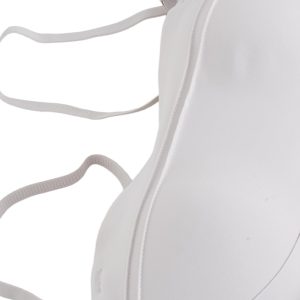
How Much Padding Should and Everyday Push-Up Bra Have?
More padding does not necessarily make a better push-up bra.
In fact, when developing an everyday push-up bra, too much padding can create exactly the problems a brand is trying to avoid: excessive bulk, an unnatural cup shape, pressure at the bottom of the breast, visible cup edges and discomfort after several hours of wear.
Too little padding creates the opposite problem. The bra may feel comfortable, but the expected lift and shaping effect disappears.
So when a brand asks:
“How thick should the padding be?”
there is rarely one correct number.
The better question is:
“What combination of padding, cup shape and construction creates the level of lift we want without making the bra uncomfortable?”
That distinction matters during product development.
Padding Creates Lift — But It Is Only Part of the System
A push-up effect is not created by foam thickness alone.
The final result comes from several components working together:
- cup shape;
- padding position;
- foam density;
- underwire or wireless support structure;
- center-front construction;
- wing tension;
- underband stability;
- outer fabric;
- lining;
- strap position.
Imagine adding thicker padding to an existing bra without changing anything else.
The breast is pushed upward and inward, but the cup volume has effectively changed.
If the pattern is not adjusted accordingly, the wearer may experience:
- breast spillage;
- pressure at the lower cup;
- gaping near the neckline;
- an unstable center front;
- an overly compressed feeling.
This is why increasing padding during an OEM development project can require changes to the cup pattern as well.
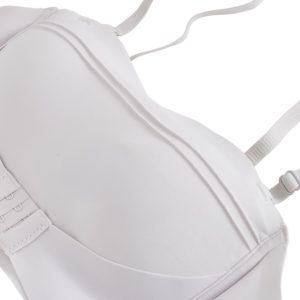
Light, Medium or Heavy Padding?
Instead of thinking only in millimeters, it is often more useful to start with the desired wearing experience.
Light Padding: Natural Shape for Daily Wear
A lightly padded push-up bra is usually intended to create a subtle improvement in shape rather than dramatic cleavage.
The customer should still feel like she is wearing an everyday bra.
This direction can work well for brands targeting:
- office wear;
- daily use;
- T-shirts;
- younger consumers;
- customers who prefer natural shaping;
- longer wearing periods.
The padding may be concentrated primarily toward the lower or outer portion of the cup rather than filling the entire cup with heavy foam.
The objective is:
shape first, volume second.
For many everyday collections, this is a useful starting point.
Medium Padding: Noticeable Lift Without Extreme Volume
Medium padding creates a more obvious push-up effect.
It can help:
- lift the breast;
- move breast tissue toward the center;
- create a fuller upper-cup appearance;
- enhance cleavage.
However, comfort becomes more dependent on the entire bra construction.
If the foam becomes thicker while the band, wire and cup remain unchanged, the bra can begin to feel restrictive.
For an everyday push-up bra, this is often the point where sampling becomes particularly important.
The development team needs to evaluate not just how the bra looks on a table, but how it feels when worn.
Heavy Padding: Strong Visual Effect, Different Product Positioning
Heavy push-up padding can create dramatic volume and cleavage.
That may be exactly what a fashion collection wants.
But it does not automatically fit an “everyday comfort” positioning.
Heavy padding adds:
- volume;
- weight;
- structure;
- heat;
- pressure inside the cup.
It can also make size grading more complicated because the relationship between breast volume, cup volume and padding needs to remain balanced across different sizes.
So before choosing heavy padding, a brand should decide whether the product promise is:
“maximum push-up effect”
or
“comfortable lift for everyday wear.”
Those are not necessarily the same product.
Where the Padding Sits Can Matter More Than How Thick It Is
This is one of the most important details when developing a push-up bra.
Two cups can contain a similar amount of foam but create very different shapes.
Bottom Padding
Foam concentrated toward the bottom of the cup tends to push the breast upward.
This can create more upper-cup fullness.
Outer-Side Padding
Padding positioned toward the outer lower cup can help move breast tissue inward.
This is useful when the desired effect is more centered cleavage.
Bottom + Side Padding
Combining the two can create both upward and inward movement.
The transition between padded and non-padded areas needs to be smooth, otherwise the cup may show an obvious ridge under clothing.
Graduated Padding
Instead of maintaining the same thickness throughout the cup, the padding gradually transitions from thicker to thinner.
For everyday products, this can create a more natural feel and appearance.
The cup does not simply feel like a thick block of foam.
What About Removable Pads?
Removable pads are common in wireless bras, bralettes and sports bras.
They are useful because customers can:
- remove the pad;
- replace it;
- adjust the appearance;
- choose whether they want additional shaping.
But removable pads and a true push-up construction are not always equivalent.
A standard removable pad usually provides coverage and moderate shaping.
A specifically engineered push-up cup controls the position and distribution of volume more precisely.
If the design brief calls for visible lift and cleavage, simply inserting a thicker removable pad may not achieve the same result as developing the cup specifically for push-up performance.
Molded Push-Up Cups vs. Inserted Padding
This is another decision brands encounter during development.
Molded Cup
A molded cup can integrate shape and different foam thicknesses into the cup itself.
Advantages can include:
- smooth appearance;
- consistent cup shape;
- clean look under fitted clothing;
- controlled padding distribution.
This makes molded cups particularly attractive for T-shirt-style push-up bras.
However, custom molded cup development may involve different tooling, development and quantity considerations depending on the design.
Inserted or Built-In Padding
Another approach is to construct the bra using separate padding components.
This can provide more flexibility for certain designs and constructions.
The best solution depends on:
- target silhouette;
- fabric;
- cup construction;
- order quantity;
- size range;
- target cost;
- desired comfort.
This is why brands should decide on the desired result before specifying the manufacturing method.
The Fabric Can Change How the Same Padding Feels
Here is something that can surprise brands during sampling:
The padding stays exactly the same, but after changing the outer fabric, the bra suddenly feels tighter.
Why?
Because the cup is not working independently.
Suppose Sample A uses a highly flexible outer fabric.
Then Sample B uses a firmer fabric with lower stretch.
Even with the same foam and pattern, Sample B may hold the cup more tightly and create a stronger feeling of compression.
Fabric characteristics that can affect the result include:
- stretch percentage;
- stretch direction;
- recovery;
- fabric weight;
- thickness;
- lamination;
- lining structure.
This is one reason why changing fabric after fit approval should be evaluated carefully.
A fabric substitution that looks minor on a specification sheet can change how the finished bra behaves on the body.
Everyday Comfort Depends on the Cup Edge Too
Padding discussions usually focus on the center of the cup.
But for everyday bras, the cup edge deserves just as much attention.
If the transition is too thick or rigid, it may become visible underneath a T-shirt.
It can also create a visible line across the breast.
For a smooth everyday push-up bra, the neckline and cup edge need to transition naturally against the body.
That is why a successful everyday push-up bra is not simply:
ordinary bra + thick foam.
The cup has to be developed as a complete structure.
One Padding Level May Not Work Across Every Cup Size
This becomes particularly important when a brand expands its size range.
A padding proportion that looks balanced in a smaller cup may create too much volume in a larger cup.
For this reason, some collections may need different padding proportions or cup constructions across the size range.
For example, the brand may want:
- stronger enhancement in smaller cup sizes;
- more moderate padding in larger cup sizes;
- increased support as cup volume increases.
The exact solution depends on the brand’s fit philosophy and target customer.
This should be considered during grading rather than discovered only after bulk production.
A Better Way to Brief Your Manufacturer
Instead of sending a request such as:
“We want a push-up bra with thick padding.”
give the development team more context.
For example:
“We are developing an everyday push-up bra for long-hour wear. We want a natural-looking lift and moderate cleavage, but the cup should remain smooth under a fitted T-shirt. The bra should not feel heavily padded.”
That description tells the manufacturer much more.
You can also provide:
- reference photos;
- an existing bra with the desired lift;
- target cup shape;
- preferred neckline;
- desired cleavage level;
- whether the product should be wired or wireless;
- target fabric;
- target size range.
The more clearly the desired wearing experience is communicated, the easier it becomes to develop the right construction.
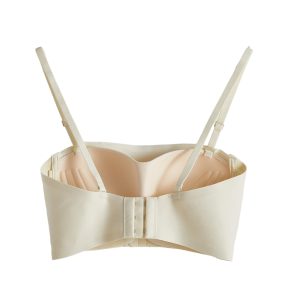
What Should Brands Check on the First Push-Up Bra Sample?
When the first sample arrives, don’t evaluate only whether it “looks good.”
Try to answer specific questions.
1. Is the lift coming from the correct area?
Does the bra push upward, inward, or both?
Is that what the design intended?
2. Does the breast remain inside the cup?
Check for excessive spillage at the neckline and side cup.
3. Is there empty space anywhere?
Look for gaping, especially when the wearer moves.
4. Is the padding obvious under clothing?
Test the sample under a fitted top.
5. Can the bra be worn comfortably for several hours?
A five-minute fitting does not tell you everything about an everyday bra.
6. Does the underband remain stable?
If the band moves upward, adding more padding will not solve the underlying support problem.
7. Does the left and right cup look symmetrical?
Padding placement and cup construction should be consistent.
These observations are much more useful to a development team than simply saying:
“Please make the push-up stronger.”
The Best Everyday Push-Up Bra Is Usually a Balance
For an everyday collection, the goal is rarely maximum padding.
It is usually the balance between:
lift + shape + stability + smoothness + comfort.
A well-developed bra can sometimes create a stronger visual effect with intelligently positioned moderate padding than another bra achieves with significantly thicker foam.
That is why padding should be treated as a design and engineering decision, not just a material specification.
Developing a Custom Everyday Push-Up Bra
If you are developing an original push-up bra for your brand, the most useful starting point is to define the desired fit and visual result.
At BrasFactory, our factory in Puning, Guangdong, China works with overseas customers on OEM and private label bra development.
For custom projects, customers can provide:
- design sketches;
- Tech Packs;
- reference bras;
- measurement charts;
- fabric requirements;
- logo artwork;
- packaging requirements.
For original customer designs, development information can also be handled under an NDA when required.
From there, the padding, cup structure, materials and other construction details can be evaluated during sample development.
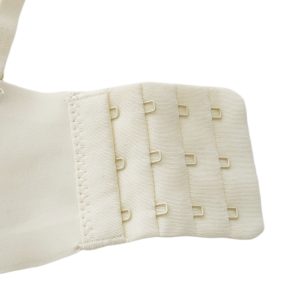
Have an everyday push-up bra design you want to develop?
Send your design or reference sample to discuss the project.
BrasFactory
Puning, Guangdong, China
Website: https://www.brasfactory.com/
Email: Climo@brasfactory.com
WhatsApp / WeChat: +86 131 4874 7185
FAQ
Is thicker padding always better for a push-up bra?
No. Thicker padding can increase volume, but excessive padding may reduce comfort or create fit problems. Padding position, cup shape and overall bra construction are also important.
What type of padding is best for an everyday push-up bra?
There is no single best option. For everyday wear, many brands prefer a balance between moderate lift, smooth cup shape and long-wear comfort rather than maximum padding.
Can push-up padding be customized?
Yes. Depending on the cup construction, the shape, position and amount of padding can be developed according to the desired push-up effect.
Can an everyday push-up bra be wireless?
Yes. Wireless push-up designs are possible, but the support structure differs from a traditional underwired push-up bra. Cup construction, side support and underband stability become especially important.
Why did my push-up bra fit change after changing fabric?
Different fabrics have different stretch, recovery, weight and tension. Changing the outer fabric or lining can therefore affect how the same cup and padding behave on the body.
Can BrasFactory develop a push-up bra from our own design?
Yes. Customers can provide a Tech Pack, drawing, measurements, reference sample or other product information for evaluation and sample development.