
A everyday bra manufacturer should help a lingerie brand translate a commercial idea into a repeatable product specification. The development process needs to connect customer expectations with fit, materials, construction, size range, MOQ and quality control.
For everyday bra development, BrasFactory recommends defining the intended use and approval criteria before bulk production. This gives sampling a clear purpose and helps avoid revisions that solve one issue while creating another.
Professional everyday bra product development and technical sample review.
Related BrasFactory manufacturing resources: About and Blog.
Define the Everyday-Wear Brief
An everyday bra has to perform across long hours of normal movement, so the brief should balance comfort, support, smoothness, durability and a realistic retail price. Brands should define whether the style is intended for office wear, commuting, casual use or broad all-day use before selecting construction.
Comfort Is a Construction Decision
Comfort depends on more than soft fabric. Band tension, cup volume, wire shape or wireless support, strap pressure, seam placement and edge finishing all influence wearability. A comfortable sample should remain stable rather than becoming loose simply to feel soft.
Cup Options for Daily Wear
Molded cups can create a smooth profile, while cut-and-sew cups can offer flexible shaping and size-range options. Light padding, spacer foam and unlined constructions each serve different customers. The choice should follow the desired silhouette and support level.
During this stage, the brand should compare the revision against the approved target, document any change and confirm that the decision can be repeated consistently in bulk production. Related guidance: Contact Lifan Bras – OEM Bra Manufacturer.
Underband and Wing Stability
The band carries a significant share of support. Wing fabric and elastic should recover after repeated stretching, and the finished circumference should be tested in representative sizes. Excessively soft wings can ride up even when the cups fit correctly.
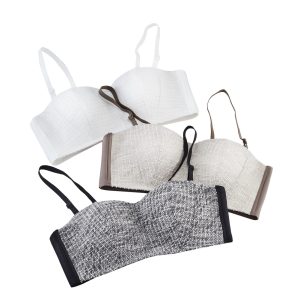
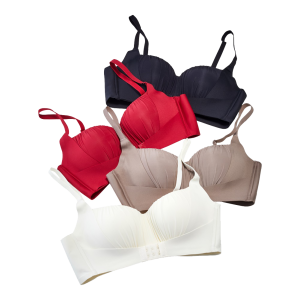
Close-up materials and construction details for everyday bra.
Straps and Hardware
Daily-wear straps should distribute load without digging in or slipping. Strap width, elastic recovery, adjuster size and attachment position should be evaluated together. Hardware finishes should also be compatible with the intended wash and wear conditions.
Fabric Selection
Microfiber, modal blends, nylon-spandex knits, cotton blends and spacer materials can create different hand feel and performance. The factory should evaluate stretch direction, recovery, pilling risk, opacity and color consistency before final approval.
Fit Across the Size Range
A base-size fitting is only the beginning. Cup depth, neckline, wing height, strap position and support requirements can change as sizes increase or decrease. Representative-size fittings help identify where grading rules need adjustment.
Repeat-Order Consistency
Everyday bras are often replenishment products, making repeatability especially important. Approved materials, measurements, construction details, labels and packaging should be recorded so later orders can match the original standard.
During this stage, the brand should compare the revision against the approved target, document any change and confirm that the decision can be repeated consistently in bulk production. Related guidance: Home.
Build a Technical Brief Before Sampling
A technical brief should identify the target customer, size range, reference products, measurements, materials, colors, branding, packaging, order quantity and critical performance requirements. Clear priorities allow the manufacturer to distinguish essential fit changes from optional styling changes.
Use Sampling to Reduce Bulk Risk
Sampling is a controlled development process rather than a formality. Each round should answer specific questions about fit, construction, material behavior and manufacturability. Consolidated comments and an approved reference sample reduce ambiguity before production.
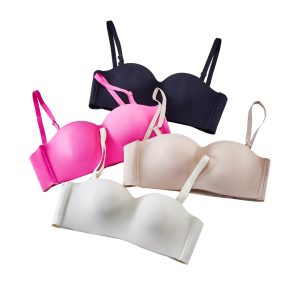
Technical quality inspection for finished everyday bra samples.
Plan MOQ Around the Supply Chain
Garment MOQ is only one part of the calculation. Fabric mills, lace suppliers, elastic dyeing, molded components, labels and packaging can introduce separate minimums. A focused assortment with fewer colors or materials can make an initial order more efficient.
Approve Production-Intent Materials
Fit approval should use materials that closely represent bulk production. Changes in elastic recovery, foam, mesh or covering fabric can alter measurements and support even when the pattern remains unchanged.
Set a Clear Quality Standard
Quality control should cover measurements, symmetry, stitching, elastic attachment, cup or panel consistency, labels and packing. The brand and factory should agree on critical defects and tolerances before bulk inspection.
Prepare for Repeat Orders
The approved specification should record materials, measurements, construction, component codes, artwork and packing. This creates a reliable reference for replenishment and future color extensions.
External Reference
Brands can also review OEKO-TEX when defining material, labeling or market requirements relevant to their product.
Working With BrasFactory
BrasFactory supports OEM and private-label bra development from our factory in Puning, Guangdong. Projects can begin with a physical reference sample, technical specification or design concept and progress through sampling, fitting, material approval and controlled bulk production.
More BrasFactory resources: Shop and Best Fabrics for Push-Up Bras: How to Choose the Right Material.
How to Build an Everyday Bra Range for Retail
An everyday bra program is usually stronger when the first collection is deliberately focused. Instead of launching many constructions at once, a brand can begin with a core silhouette and use color, cup coverage, padding level or fabric hand to create controlled variation. This makes fitting, material purchasing and repeat-order management easier. It also gives the brand a clearer way to evaluate which sizes and colors generate repeat demand before expanding the assortment.
For wholesale and private-label projects, the commercial brief should identify the intended retail channel and target price. A bra designed for an online direct-to-consumer brand may prioritize broad size coverage and easy replenishment, while a department-store program may require specific packaging, color continuity and testing requirements. These decisions affect fabric sourcing, component selection and MOQ planning.
Wear Testing Before Bulk Production
Short fitting sessions cannot reproduce a full day of wear. For a core everyday style, wear testing can reveal strap movement, band riding, edge pressure, cup gaping and changes in comfort after several hours. Test wearers should record the size worn, duration, activities and specific observations so comments can be compared rather than treated as general impressions.
After washing, the same samples can be reviewed for elastic recovery, cup deformation, pilling, color change and label comfort. The objective is not to make a product indestructible; it is to confirm that the construction performs consistently with the brand’s intended quality level and care instructions.
Production Review 1
Before this style enters bulk production, the brand and manufacturer should review the approved sample together with the written specification. Measurements, materials, component references, color standards, workmanship and packing instructions should describe the same product. Any late change should be recorded clearly so that the production line and quality team are not working from an outdated approval.
Representative bulk pieces should be compared with the approved standard during production, not only after the entire order is complete. Early checks can identify variation in elastic tension, cup or panel symmetry, stitching, measurements and component placement while corrective action is still practical. For repeat orders, the same records provide a useful baseline for checking whether materials or workmanship have drifted from the original standard.
Production Review 2
Before this style enters bulk production, the brand and manufacturer should review the approved sample together with the written specification. Measurements, materials, component references, color standards, workmanship and packing instructions should describe the same product. Any late change should be recorded clearly so that the production line and quality team are not working from an outdated approval.
Representative bulk pieces should be compared with the approved standard during production, not only after the entire order is complete. Early checks can identify variation in elastic tension, cup or panel symmetry, stitching, measurements and component placement while corrective action is still practical. For repeat orders, the same records provide a useful baseline for checking whether materials or workmanship have drifted from the original standard.
Frequently Asked Questions
Can I develop a custom everyday bra from a reference sample?
Yes. A reference sample can communicate fit, construction and material expectations. Requested changes should be documented so the new specification is clear.
Can I add private-label branding?
Yes. Labels, hangtags and packaging can be incorporated when artwork, dimensions, placement and target-market requirements are confirmed before production.
Should final materials be approved before bulk production?
Yes. Production-intent materials should be reviewed because stretch, recovery, thickness and component behavior can affect fit and appearance.