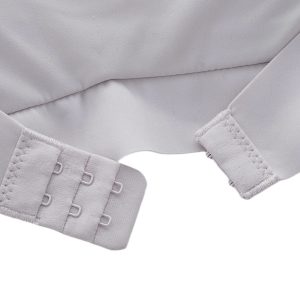
How to Choose a Seamless Bra Factory in China
Choosing the right seamless bra factory is one of the most important decisions for lingerie brands that want to build reliable products and long-term business relationships. China has become one of the world’s leading manufacturing hubs for seamless bras, offering advanced knitting technology, competitive pricing, and strong OEM capabilities.
However, not every factory offers the same level of quality, flexibility, or production experience. If you’re evaluating suppliers for OEM production, you may also like our guide on how to evaluate a bra manufacturer before starting OEM production.Before placing an order, buyers should carefully evaluate a factory’s manufacturing expertise, quality control system, customization options, and communication efficiency. A reliable seamless bra factory can help reduce production risks while ensuring consistent product quality and timely delivery.
5. Understand MOQ and Pricing Structure
Minimum Order Quantity (MOQ) is one of the first factors buyers should confirm before starting cooperation. Different seamless bra factories may have different MOQ requirements depending on product complexity, fabric selection, and customization.
When discussing pricing, ask for a detailed quotation that includes:
- Sampling fees
- Unit price
- Logo printing or label costs
- Packaging options
- Shipping terms
The lowest price is not always the best choice. A factory offering stable quality and reliable delivery often provides greater long-term value.
6. Evaluate Sampling Capability
A professional seamless bra factory should provide a structured sampling process before mass production.
The sample should allow you to evaluate:
- Overall fit
- Fabric quality
- Elastic recovery
- Stitching consistency
- Logo placement
- Packaging quality
Most experienced OEM manufacturers can complete samples within 7–15 working days, depending on design complexity.
7. Review Production Capacity and Lead Time
Production capacity determines whether a factory can support your business as it grows.
Important questions include:
- Monthly production capacity
- Peak season lead times
- Average production cycle
- Number of production lines
- Ability to handle repeat orders
A factory with sufficient capacity can reduce delays and maintain consistent delivery schedules.
8. Verify Certifications and Compliance
International buyers should work with manufacturers that follow recognized quality and social responsibility standards.
Common certifications include:
- OEKO-TEX® Standard 100
- BSCI
- ISO 9001
- GRS (Global Recycled Standard)
- SGS testing reports
These certifications demonstrate that the factory meets internationally accepted production and quality requirements.
9. Assess Communication and Customer Service
Good communication is often overlooked but plays a significant role in successful OEM projects.
Choose a factory that:
- Responds promptly to inquiries
- Provides clear quotations
- Offers professional technical support
- Updates production progress regularly
- Solves problems efficiently
A responsive supplier can prevent misunderstandings and improve project efficiency.
10. Consider Long-Term Partnership Potential
Instead of choosing a supplier based only on the first order, evaluate whether the factory can support your brand’s future growth.
An ideal seamless bra factory should offer:
- Product development support
- New material recommendations
- Flexible customization
- Stable production quality
- Long-term OEM cooperation
Building a lasting partnership often leads to better pricing, faster production, and continuous product improvement.
Conclusion
Selecting the right seamless bra factory in China requires more than comparing prices. Buyers should evaluate manufacturing technology, OEM experience, quality control, production capacity, certifications, and communication efficiency before making a decision.
A reliable manufacturing partner not only delivers high-quality seamless bras but also helps brands reduce risks, improve product consistency, and scale their business with confidence.
Frequently Asked Questions
1. What is a seamless bra factory?
A seamless bra factory specializes in producing bras using circular knitting technology, creating garments with fewer seams for improved comfort and flexibility.
2. What is the typical MOQ for OEM seamless bras?
Most manufacturers require between 300 and 1,000 pieces per style, although requirements vary depending on customization.
3. How long does OEM production take?
Sampling usually takes 7–15 days, while bulk production typically requires 30–45 days after sample approval.
4. Can seamless bra factories provide private label services?
Yes. Most experienced manufacturers offer private labeling, custom logos, packaging, and OEM product development.
5. How do I evaluate a seamless bra manufacturer?
Review the factory’s production equipment, quality control system, certifications, communication, sampling process, and customer references before placing an order.
1. Verify Seamless Knitting Technology
Modern seamless bras require specialized circular knitting machines that produce garments with fewer seams, improved comfort, and better elasticity.
Ask the factory about:
- Seamless knitting equipment
- Machine brands and production capacity
- Available knitting gauges
- Fabric compatibility
- Production efficiency
Factories equipped with advanced seamless knitting technology usually provide more stable product quality and greater design flexibility.
2. Review OEM Manufacturing Experience
An experienced OEM manufacturer understands every stage of product development, from sampling to mass production.
Important questions include:
- How many years have they produced seamless bras?
- Which export markets do they serve?
- Do they support private label production?
- Can they develop custom designs?
Factories with extensive OEM experience generally offer smoother communication and fewer production issues.
3. Evaluate Product Quality Control
Quality control is critical for seamless bra manufacturing because even small knitting defects can affect product performance.
A professional factory should inspect:
- Raw materials
- Fabric elasticity
- Stitch consistency
- Size measurements
- Color accuracy
- Final packaging
Reliable quality management helps reduce defective products and customer complaints.
4. Check Material Options
Different fabrics create different performance characteristics.
Common materials include:
- Nylon
- Spandex
- Polyester blends
- Moisture-wicking fabrics
- Recycled fibers
Choose a factory that offers multiple fabric options suitable for sports bras, everyday bras, and premium lingerie collections.